
Boat trips and water activities in Brazil: what the water is for
Water is the main reason most people travel in Brazil, and it comes in forms that have almost nothing in common: a schooner between islands, a drift down a spring-fed river, a raft through rapids, or an afternoon on a river beach.
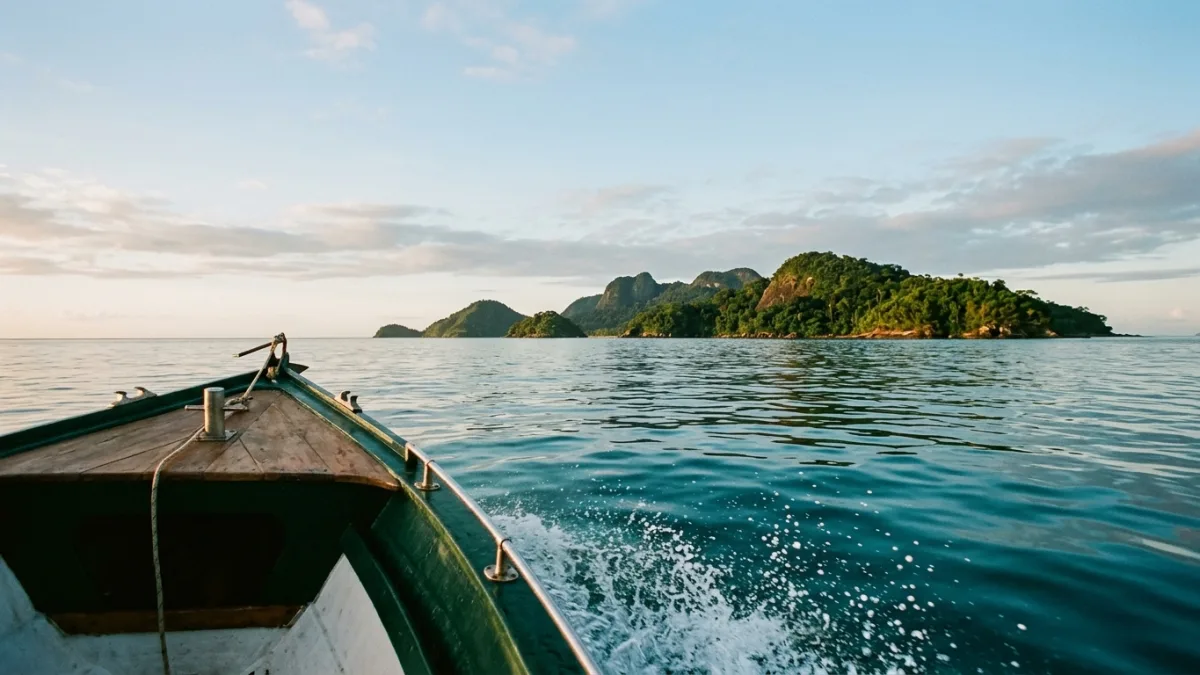
Four different kinds of water
It is worth separating them, because travellers book one expecting another. Sea trips are about movement between places and about the boat itself. Snorkel floats in clear rivers are about looking down and staying still. Rafting and tubing are about the current doing something to you. River beaches are about staying put.
The confusion that costs most is between a snorkel float and a rapid activity. One is quiet, contemplative and slow; the other is noisy and fast. Someone who books the second expecting the first leaves disappointed, and the reverse is just as true.
Clear rivers, and why they exist
The spring-fed rivers of the limestone country are Brazil most distinctive water experience. Rain filters through the rock and re-emerges already clean, with almost no sediment in suspension, which is why the visibility is what it is.
That clarity is also fragile, and it is the reason those attractions are so tightly controlled: a limited number of visitors per day, groups spaced apart, and one rule enforced above all others — do not stand on the riverbed, because the sediment you lift stays in the water for minutes and erases the visibility for everyone behind you.
Sea trips
- Schooners with several stops, on a fixed route, comfortable and busy.
- Small boats for hire, which go where you ask and cost more per person unless the group is large.
- Water taxis, which simply drop you on a beach and return later.
- Diving, on offshore archipelagos and along parts of the coast, with its own seasons and certification requirements.
All of them depend on weather and are cancelled regularly. In a short stay, planning a single day for a boat trip is how people end up not doing it.
Which season each one wants
Clear water wants dry months, because rain washes sediment into the river. Rapids want the opposite: more water means a stronger descent, up to the point where the operator suspends it for safety. River beaches want heat, which means the rainy summer.
That is why a single itinerary rarely optimises for all of them, and why it pays to decide which one matters most before choosing the dates.
How to choose a boat trip
The same stretch of coast is usually served by three formats, and they are not interchangeable. A schooner follows a fixed route with a crowd and a soundtrack; a small hired boat goes where you ask and waits while you swim; a water taxi drops you and returns at an agreed hour, leaving you alone on a beach with no facilities.
For a couple, the schooner is normally the sensible choice. For four or more people, hiring a small boat often costs little more per head and changes the day entirely. And for anyone who wants an empty beach rather than a tour, the water taxi is the only one of the three that delivers it.
What to bring on the water
- Sun protection that stays on: the reflection off water roughly doubles the exposure.
- A hat that will not blow off, or none at all.
- A dry bag or a sealed case for anything electronic.
- Water and something to eat, because a boat rarely has either.
- A light layer for the return leg, when wind and wet clothes make it colder than the outward one.