Nature and wildlife in Brazil: where animals are actually visible
Brazil has extraordinary wildlife and it is not evenly visible. The single most useful thing a visitor can know is that the forest hides animals and the open floodplain shows them — which is why the best wildlife destination is not the one most people assume.
Forest hides, open country shows
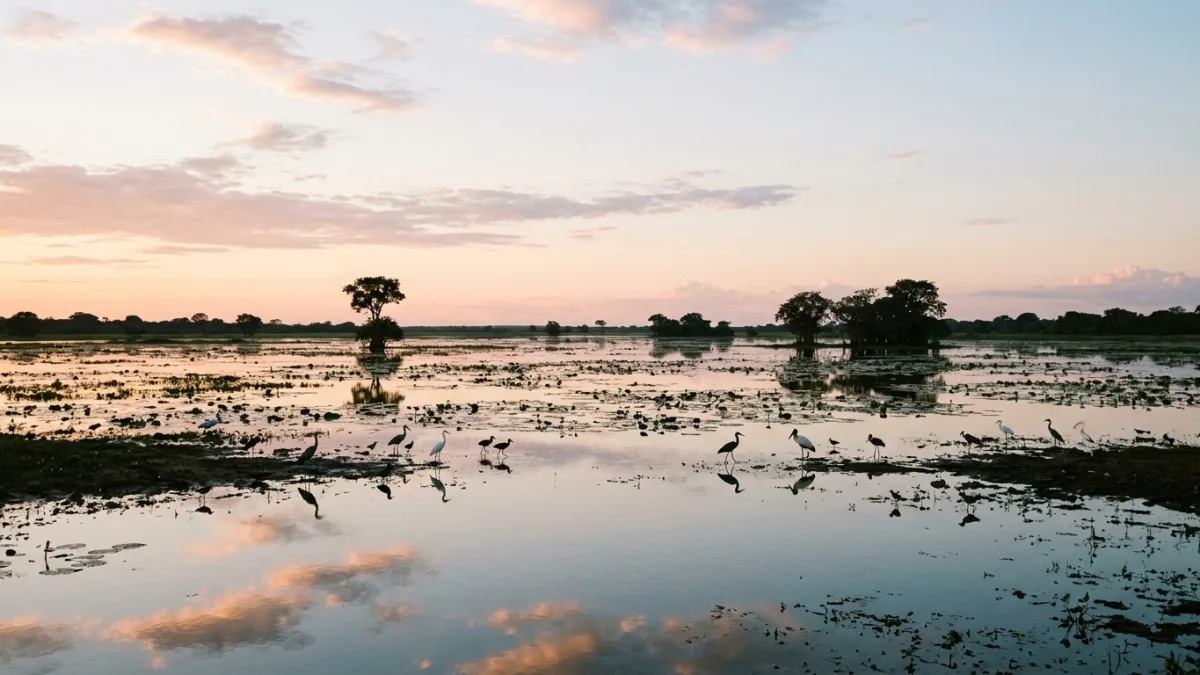
Most visitors assume the Amazon is where you see animals. In practice it is the hardest place to see them: the forest is dense, the canopy is tall, and much of the wildlife is above you, hidden, or active at night. The Pantanal is open floodplain, and animals are simply visible in a way they are not under a closed canopy.
It is not that one has more life than the other. It is that one can be seen. A traveller whose priority is wildlife should build the itinerary around that fact rather than around the famous name.
The biomes, briefly
Pantanal — seasonally flooded plain; the easiest wildlife watching in the country, best in the dry season.
Amazon — rainforest and enormous rivers; a river destination more than a wildlife one.
Cerrado — highland savanna, open and dry, with species found nowhere else.
Atlantic forest — coastal rainforest, fragmented, with high endemism and difficult visibility.
Caatinga — semi-arid interior, dramatic and rarely visited.
The hours decide as much as the place
Wildlife moves at dawn and at dusk. Everything else is a compromise. A day trip that arrives mid-morning and leaves mid-afternoon occupies exactly the quietest window of the day, which is why the same destination can deliver a spectacular experience to one visitor and nothing to another.
If wildlife is the reason for the trip, that fact should shape where you sleep: inside the area rather than in the nearest town, so that the first outing starts before the sun.
Wild fauna is not a schedule
Nothing is guaranteed. Caimans, capybaras and water birds are close to certain in the right places; large mammals are possible and never promised. A visitor who arrives with a checklist tends to be disappointed; one who arrives to spend days in the field usually leaves with more than expected.
Silence and patience are worth more than any equipment, with one exception: binoculars change a wildlife trip more than anything else you can carry.
Protected areas have rules
Many of the best places are conservation units where public use follows a management plan: some areas are closed, some trails require an accredited guide, and some have a daily quota. Those rules change and are set locally, so they are worth confirming for your dates rather than assuming.
The Amazon is a river destination more than a wildlife destination. Understanding that before you book is what separates a remarkable trip from a disappointed o
Brazil holds one of the largest bird lists of any country, spread across biomes that could not be more different. Where you go decides what you see far more tha
Sport fishing in Brazil is regulated, seasonal and, in most of the country, catch and release. Understanding the closed season and the licence matters more than
Brazil has dozens of national parks across every biome, and visiting one is not like visiting an attraction. Public use follows a management plan that sets what
The Pantanal is the place in Brazil where wildlife is easiest to see, and it works the opposite way to what people assume: the best season is the dry one, when