
Ilhabela or Ubatuba: which suits your trip
Ilhabela and Ubatuba sit close together on the São Paulo north coast and are genuinely different trips. One is an island you cross to; the other is a coastline
The São Paulo coast is where the Atlantic forest comes down to the water: hundreds of small beaches separated by headlands, islands offshore and waterfalls a few kilometres inland. It is the most accessible coast in Brazil, and that is both its strength and its problem.
Unlike the long open strands of the north-east, the São Paulo coast is fragmented: the mountains of the Serra do Mar run close to the sea, and every headland separates one beach from the next. The result is a coastline of hundreds of small, distinct bays rather than a handful of famous ones.
That geography also explains what is behind the beaches. The same range that fragments the coast catches the moisture coming off the ocean, which is why there are waterfalls a few kilometres inland from the sand — a combination that is rare anywhere else.
Offshore there are islands ranging from large inhabited ones, reached by ferry, to small uninhabited ones visited by schooner or water taxi. Those trips are the standard way to reach the clearest water on this coast, since the beaches closest to river mouths and towns are rarely the clearest.
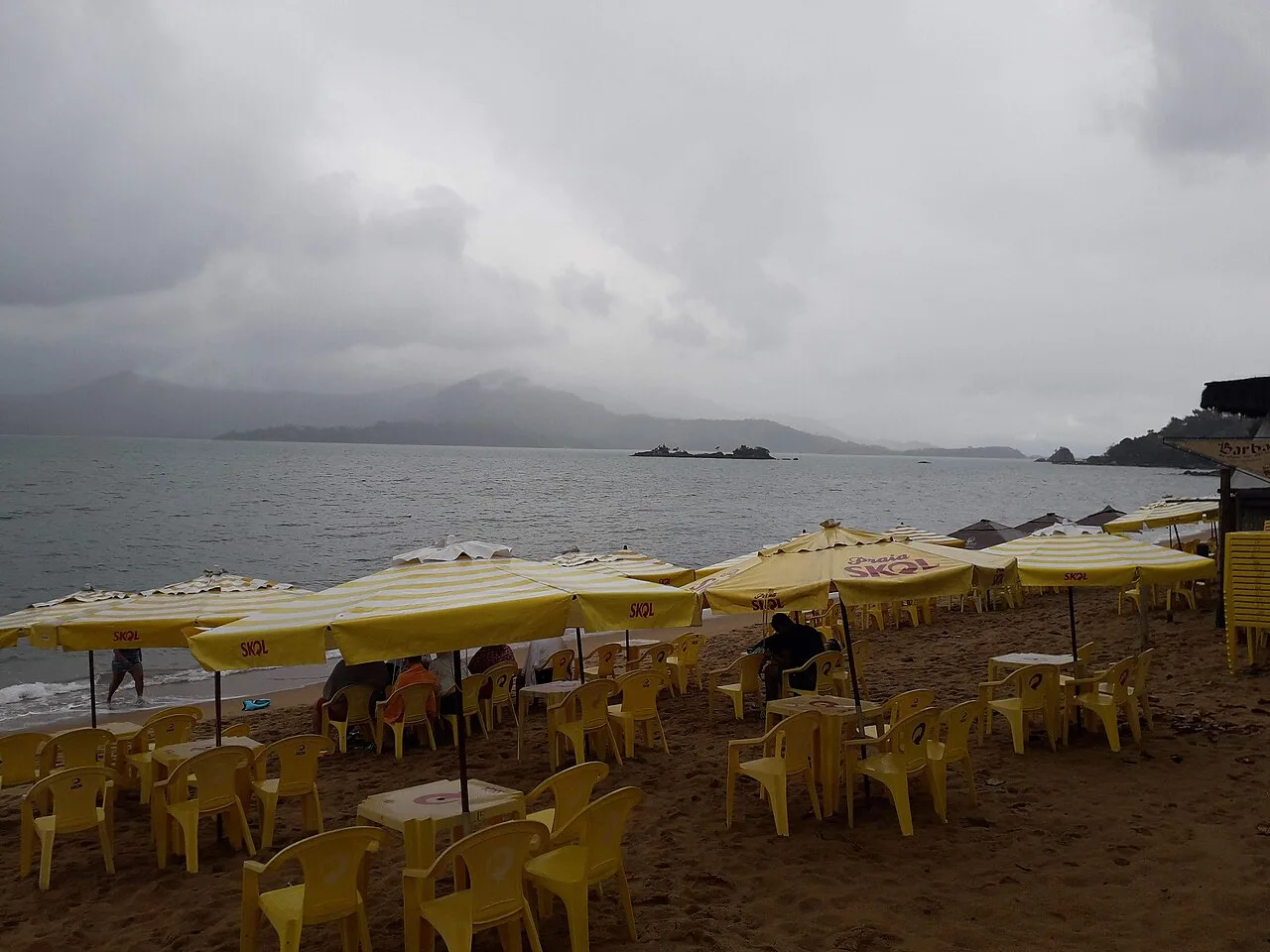
This is the closest coast to the largest city in Brazil, and it shows. In January, in February and on long weekends, roads jam and beaches fill. The same places in a week in May are almost empty — and the sea is still swimmable, though cooler.
Rain concentrates in the southern summer, which is also the peak season. Anyone with flexibility gets a better trip outside those months, and the difference is not subtle.
The mountains that fragment this coast also make it one of the wettest places in Brazil, and the water has to go somewhere. A few kilometres inland from the sand there are waterfalls and river pools reached by short trails, many of them inside state parks with marked routes and a gate.
For a visitor this is the answer to the day that the sea does not cooperate — grey, rough or crowded. It is also a different landscape entirely: dense forest, cool water and shade, twenty minutes from a beach that was full of people. On a two-week coastal trip it is worth deliberately keeping one day for it rather than treating it as a fallback.
Ilhabela and Ubatuba sit close together on the São Paulo north coast and are genuinely different trips. One is an island you cross to; the other is a coastline