Bonito, MS travel guide
Bonito, in Mato Grosso do Sul, is the one destination in Brazil where you cannot improvise. Every attraction runs on a booking system with a daily cap, and the

This article has not been translated into Français yet. Go to the Français home page
This article has not been translated into Deutsch yet. Go to the Deutsch home page
This article has not been translated into Italiano yet. Go to the Italiano home page
This article has not been translated into Português yet. Go to the Português home page
This article has not been translated into Português yet. Go to the Português home page
There is no single best month. The dry season gives you reliable clarity and more people; the wet season gives you fuller waterfalls, greener forest and a real chance that the river you came for is cloudy.

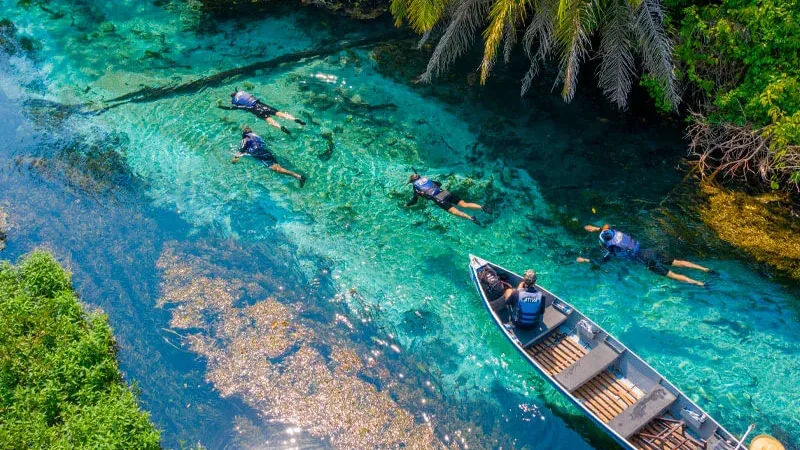
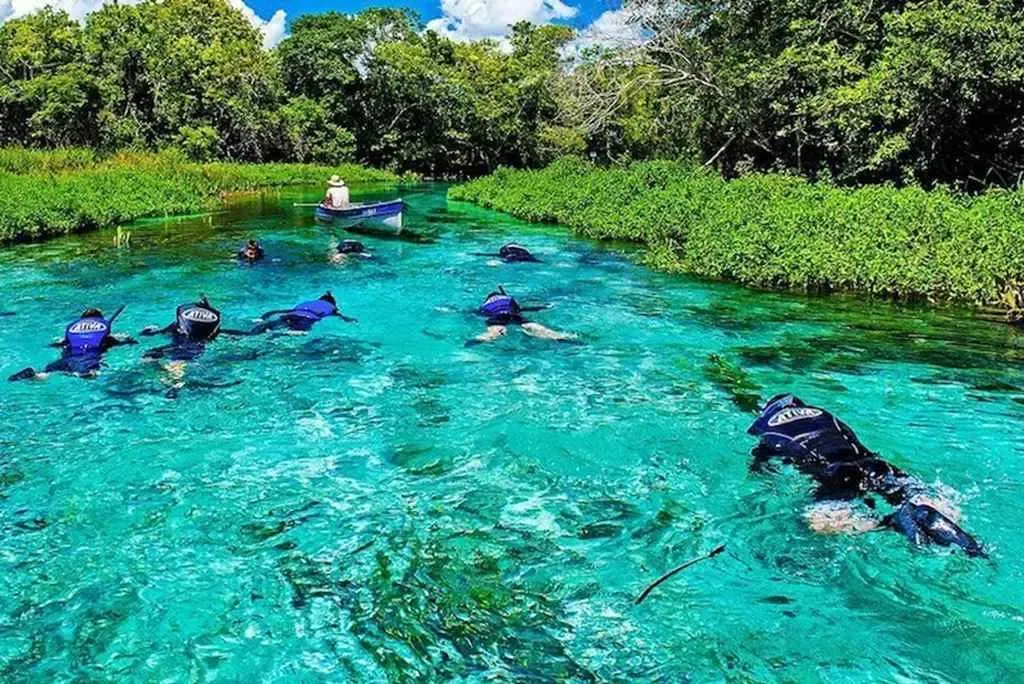
The question behind "when should I go to Bonito" is almost always about the water. Everything else here — the trails, the caves, the farms — works most of the year. The transparent rivers are the reason people travel this far, and they are the one thing the weather can take away.
So the useful answer starts with why the water is clear at all. The limestone of the Serra da Bodoquena makes suspended sediment precipitate out before it reaches the springs. Rain upstream puts sediment back in faster than the process removes it, and the river goes cloudy for days afterwards. It is not the season that decides clarity; it is how much rain fell in the days before you got in.
Roughly from the middle of the year, rain becomes infrequent and the rivers settle. This is when clarity is most reliable, when operators cancel least, and when a trip booked months in advance is most likely to deliver what the photographs promised.
The cost is company and temperature. These are the busiest months, the daily quotas fill earlier, and the water is cold enough that a wetsuit stops being optional on the longer floats. Mornings in the interior can be genuinely cold, which surprises people who packed for the tropics.
From late in the year through the start of the next, rain is frequent, often as a heavy afternoon storm rather than all-day drizzle. Waterfalls run full, the forest is at its greenest, and the region feels alive in a way the dry months do not match.
The risk is the obvious one: a storm upstream can cloud a river you booked weeks ago, and the call is made on the morning by the property. Trips in these months need a spare day far more than trips in the dry season do.
The shoulder periods at either end are the compromise most repeat visitors settle on: rain is possible but not constant, the quotas are easier, and the waterfalls still carry water. It is also when the region is pleasant to be in rather than merely functional.
| Drier months | Wetter months | Shoulder | |
|---|---|---|---|
| Water clarity | Most reliable | Can drop for days after a storm | Usually good |
| Waterfalls | Lower flow | Full and loud | Still running |
| Crowds and quotas | Busiest; book early | Quietest | Manageable |
| Temperature | Cold mornings; cold water | Warm and humid | Mild |
| Spare day needed | Useful | Essential | Useful |
Brazilian school holidays and long weekends fill the daily quotas before anything else. In those weeks the limiting factor is not the rain but the number of places, and the popular attractions can be unavailable for your whole stay if you book late.
If your dates fall in one of those periods, book the attractions before the accommodation. The room has alternatives; the voucher does not.
Clarity follows recent rainfall rather than the calendar, so no month guarantees it. The drier middle part of the year is the most reliable because storms are infrequent, but a dry week in the wet season produces water just as clear, and a freak storm in the dry season clouds it just the same.
The property decides on the morning whether the attraction runs, based on the state of the river. What happens to your voucher depends on the attraction and on how you booked — some rebook, some refund, some do neither. Ask that question at the time of booking rather than when the rain starts.
The springs hold a steady temperature all year, and that temperature feels cold on a winter morning and pleasant on a summer afternoon. Operators supply wetsuits for the longer floats and the practice is standard in the cooler months. You do not need to bring your own.
Yes, though they are quieter. Flow drops but does not stop, the pools at the bottom remain swimmable, and the trails are in better condition than after heavy rain. If waterfalls are the main reason for the trip rather than the rivers, the wetter months give you more.
Bonito, in Mato Grosso do Sul, is the one destination in Brazil where you cannot improvise. Every attraction runs on a booking system with a daily cap, and the
The honest answer is four nights, and the reason is structural: each attraction takes most of a day, they are spread over a wide area, and two in one day is the
Bonito runs a system that catches almost every first-time visitor out: you cannot turn up at an attraction and pay to go in. Access is sold in advance, through