
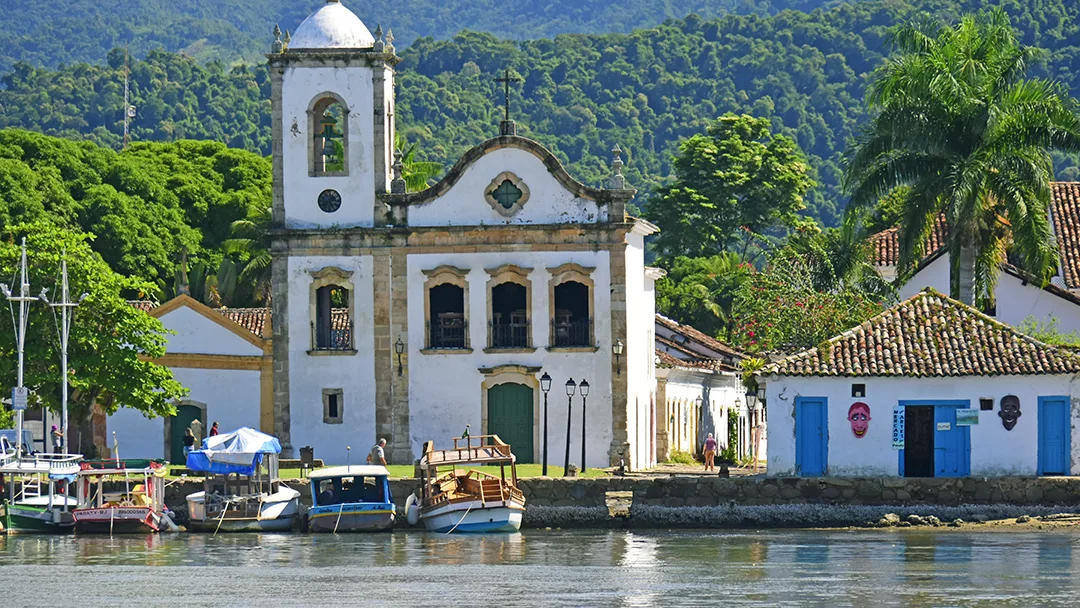
Paraty travel guide
Paraty combines a preserved colonial centre, a bay full of islands and the rainforest of the Serra do Mar. Three distinct kinds of day sit within reach of one b
Bonito, in Mato Grosso do Sul, is the one destination in Brazil where you cannot improvise. Every attraction runs on a booking system with a daily cap, and the trip is built backwards from what you can get a place on.
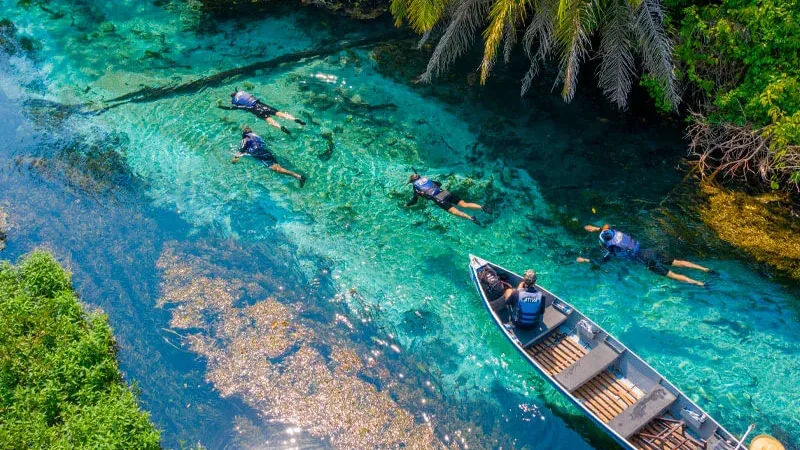
Bonito sits in the south of Mato Grosso do Sul, on the edge of the Serra da Bodoquena, closer to the Paraguayan border than to any large Brazilian city. It is a small town in cattle country, and almost nothing that brings visitors here is inside it: the attractions are farms and protected areas spread across a municipality that takes a long time to cross.
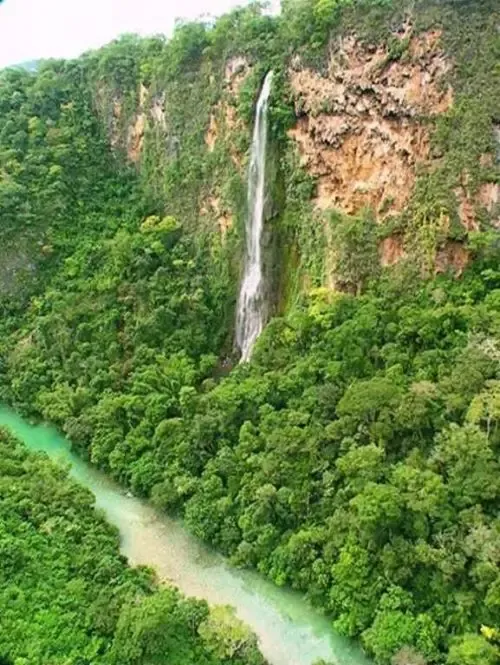
The limestone under the whole region is what makes the place. Rainwater filters down through the rock, leaves its sediment behind on the way and comes back up in springs so clear that the rivers look like glass. The same process dissolved the rock underneath and left caves, sinkholes and flooded chambers.
That geology explains everything else, including the rules. Clear water stays clear only while the riverbed is left alone, so the number of people who can enter each river in a day is capped, and the cap is enforced. It is the most tightly regulated mainstream destination in Brazil, and it is regulated because the product is fragile.
You do not turn up at an attraction and pay at the gate. Every visit is booked through an accredited agency, which issues a voucher naming the person, the attraction and the time slot. The attraction will not admit you without it, and there is no walk-up queue to join.
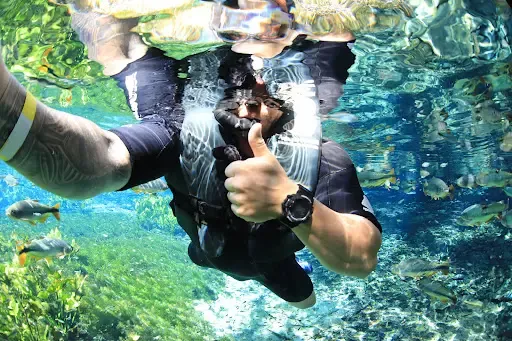
Most attractions also require an accredited guide who goes with the group. This is not an upsell added at the counter: it is how access works, and it is the reason the same attraction handles a limited number of people per day regardless of how many want in.
The practical consequence is that the trip is built backwards. You do not decide what to do and then find a slot; you find out what has slots and build the days around that. Booking from home a few weeks ahead is the difference between the trip you planned and whatever was left.
Visibility is the whole product here, and it depends on rain. Heavy rain stirs sediment into the rivers and turns a flotation trip into a swim in cloudy water; when that happens some attractions suspend operations outright rather than sell a bad day.
The drier months give the most reliable visibility and the highest chance that everything you booked actually runs. They are also the busiest and the most expensive, and the ones where slots disappear first.
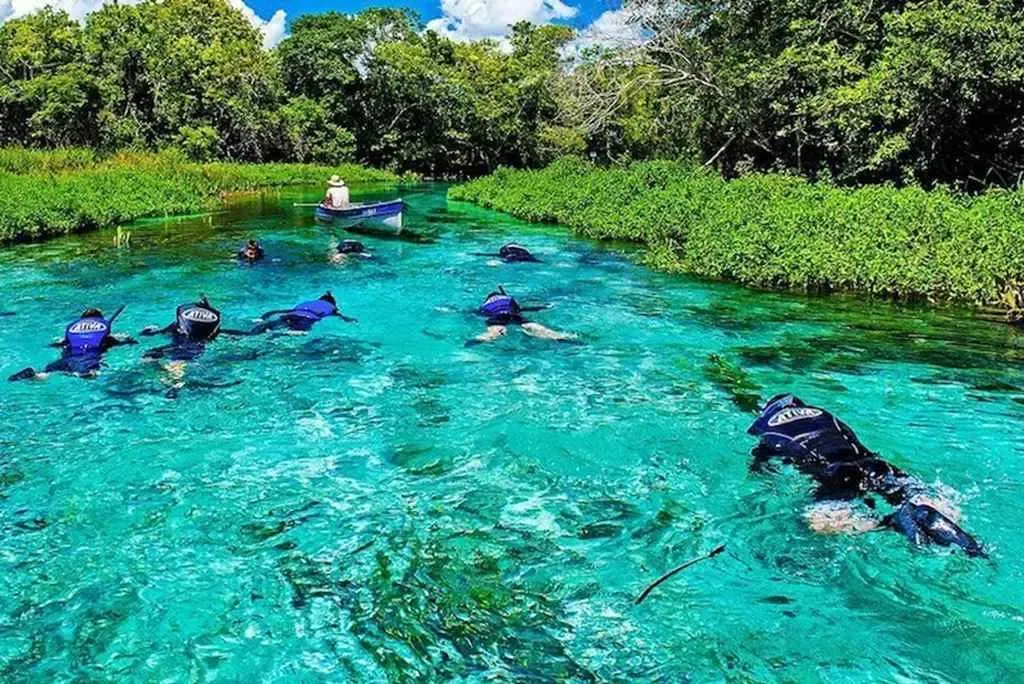
The wetter months give fuller waterfalls, greener forest and fewer people, along with the risk that the river you booked is closed on the morning you were due to go. Neither season is wrong — but confirm conditions locally in the days before you travel rather than trusting an annual average, and keep the caves in reserve, because they are unaffected by rain.
Attractions here fall into clear groups, and a good trip takes one from each rather than three of the same. Doing two flotation rivers back to back is the most common way to waste a day: the second one shows you what the first one already did.
Wildlife sits across all of them rather than in a group of its own: the sinkhole with the macaws, the birds along the rivers and the day trips to the edge of the Pantanal are added to a trip, not substituted for it.
Most attractions take half a day, and they are spread around the municipality rather than concentrated in town. Two per day is comfortable, three is a rush, and the transfers between them are part of the schedule rather than dead time between bookings.
Three full days is the sensible shape: one river, one cave, one set of waterfalls, with a slot left free for whatever the weather closes. That free slot is not padding — it is what stops a cancellation from removing something you actually wanted.
Two days forces a choice between categories rather than within them, and you will leave having seen one kind of thing. Four or five days lets you add the adventure activities, a wildlife morning or a day trip towards the Pantanal, and it is the length at which the trip stops feeling like a list.
Bonito is reached by road from Campo Grande, which is the nearest city with a full airport, and there is a regional airport at Bonito itself with limited scheduled service. Most visitors arrive by road transfer or hire car, and the journey takes a good part of a day in each direction.
Count those as travel days, not as spare afternoons. Arriving in the evening and leaving in the morning means a three-night stay gives you two usable days, which is the arithmetic most itineraries get wrong.
Once there, you need a vehicle or an agency transfer for every attraction, because they are on farms along unpaved roads rather than in town. Agencies normally include the transfer in the booking; if you drive yourself, allow for dirt roads that get worse after rain and for no mobile signal at several of the properties.
The rules that shape a trip here are not bureaucracy. The cap on visitors, the compulsory guide, the ban on touching the riverbed and the prohibition on sunscreen in some rivers exist because the clarity of the water is a physical condition that a single careless group can ruin for everyone behind them, for hours.
Follow them and the place keeps working. That is also the standard by which to judge an operator: one that talks you through the rules before you pay is doing the job, and one that promises to get you in somewhere without a booking is selling you a problem.
Paraty combines a preserved colonial centre, a bay full of islands and the rainforest of the Serra do Mar. Three distinct kinds of day sit within reach of one b