

Bonito, MS travel guide
Bonito, in Mato Grosso do Sul, is the one destination in Brazil where you cannot improvise. Every attraction runs on a booking system with a daily cap, and the
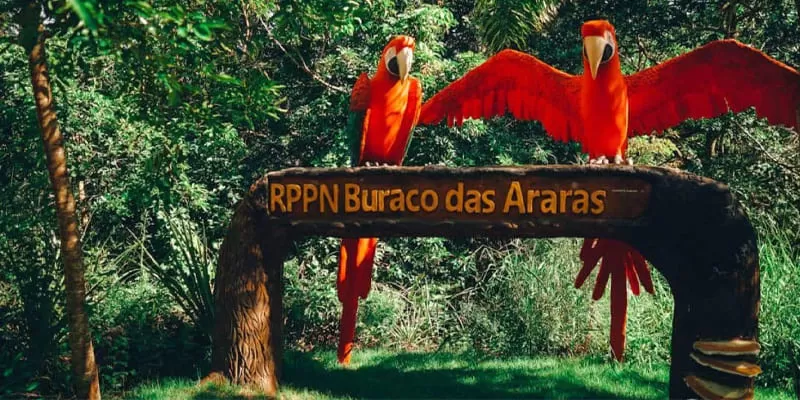
The Buraco das Araras is a vast sinkhole in the municipality of Jardim, on the road to the Rio da Prata, inhabited by red-and-green macaws. The visit is a short, flat trail to two viewpoints — the lightest outing in the region and the one that depends most on the hour.
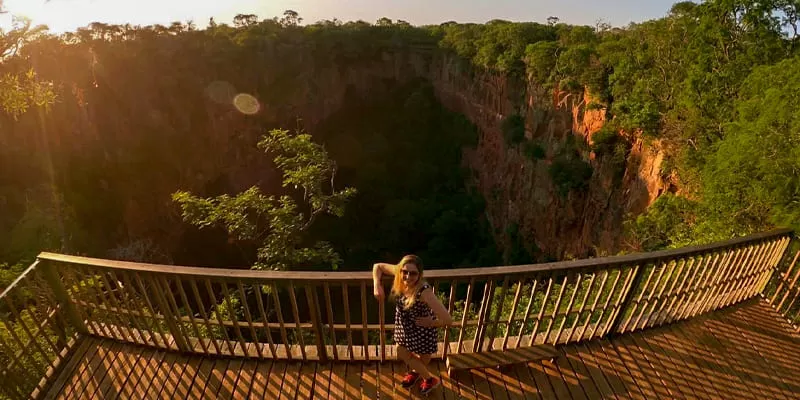
The Buraco das Araras is a doline — a depression formed when the roof of a limestone cave collapsed — in the municipality of Jardim, on the road linking Bonito to the Rio da Prata. Seen from above it is a circular pit with reddish walls, forest at the bottom and a small lake.
What made it famous is not the geology but the wildlife: the inner walls hold nests of red-and-green macaws, which spend the day flying in and out in pairs. The visit is a short, flat walk to two viewpoints, with a guide explaining the formation and pointing out the perches.
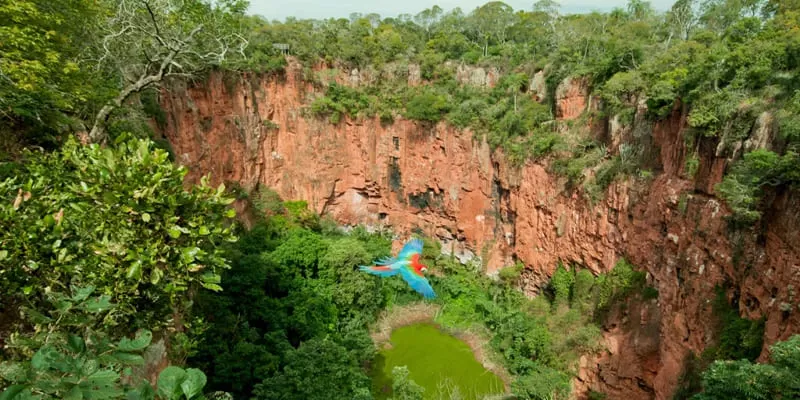
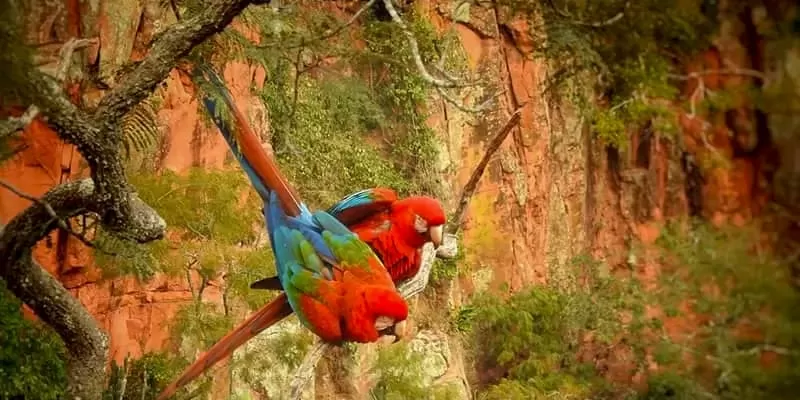
Macaws keep a routine. The busiest movement happens early in the morning, when they leave to feed, and late in the afternoon, when they return. In the middle of the day, with high sun and heat, they stay in the shade of the walls and the sinkhole looks empty.
Anyone who slots the Buraco das Araras in as a quick stop between two other things usually finds it underwhelming — and the problem was not the site, it was the hour. If you want birds in flight, book the first slot of the morning or the last of the afternoon.
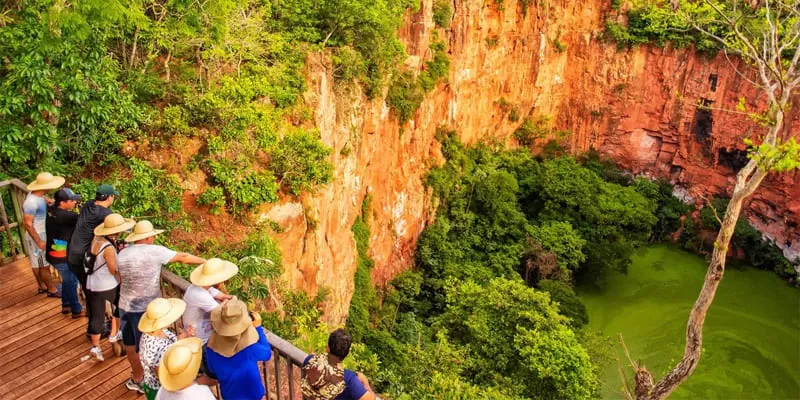
The distance between the viewpoint and the birds is considerable. A phone records the landscape of the sinkhole but rarely returns a recognisable macaw. Anyone carrying a telephoto lens goes home with the photographs that motivated the visit; anyone carrying binoculars sees far more than someone just looking.
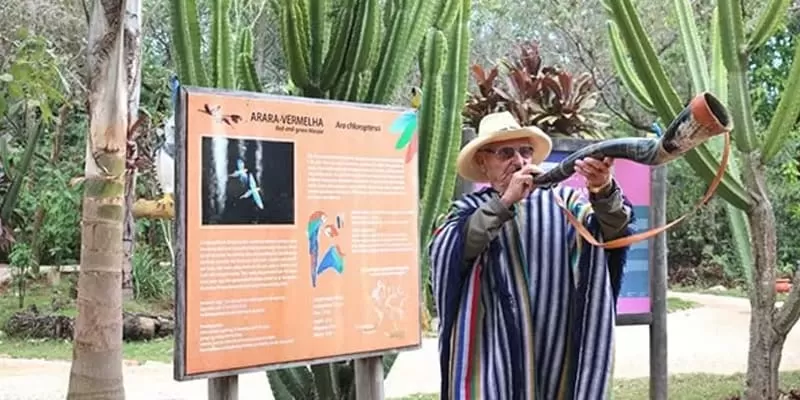
The visit works all year and does not depend on water clarity, which makes it a useful card on a rainy day when floats and waterfalls are compromised. On days of strong sun the trail and the viewpoints are open and hot: a hat and water solve it.
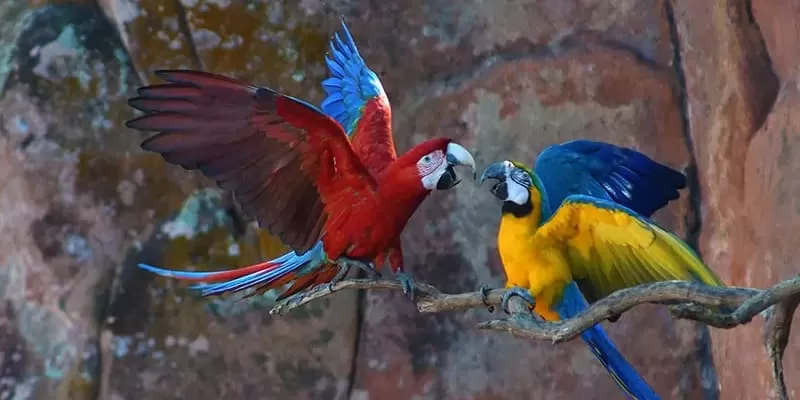
They are wild animals, so there is no guarantee. But the colony is resident and the chance of seeing them is high at the active hours. In the middle of the day it drops considerably.
It is the lightest outing in a typical Bonito itinerary: a short, flat trail with no steep stairs and no water.
It usually takes a little over an hour, which leaves room for another attraction on the same day.
Bonito, in Mato Grosso do Sul, is the one destination in Brazil where you cannot improvise. Every attraction runs on a booking system with a daily cap, and the
The Rio da Prata is the longest and most cinematic float in the Bonito region of Brazil. It starts with a forest trail, enters a spring-fed river and ends in a
Projeto Jiboia is an environmental education project in Bonito that presents snakes to the public with a talk and guided contact. It is short, covered, works on
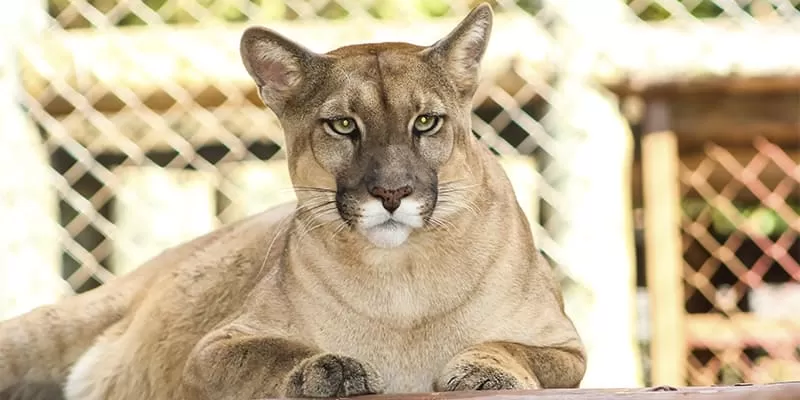
The Bio Park brings together, in a controlled setting, the aquatic and terrestrial wildlife of the Bonito region and the Pantanal. It is a short, largely covere