
Bonito, MS travel guide
Bonito, in Mato Grosso do Sul, is the one destination in Brazil where you cannot improvise. Every attraction runs on a booking system with a daily cap, and the
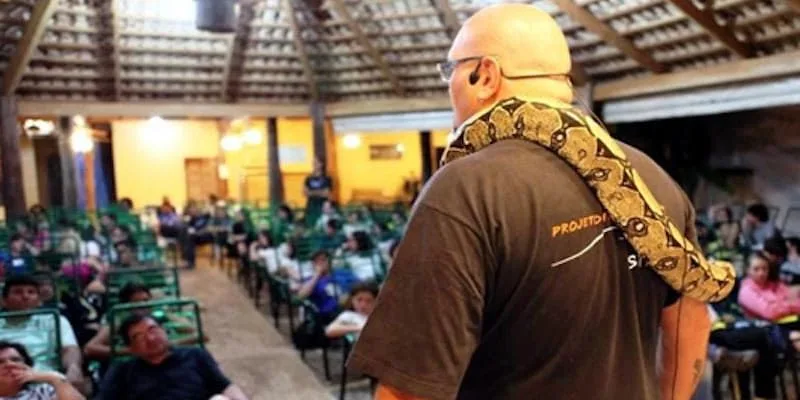
Projeto Jiboia is an environmental education project in Bonito that presents snakes to the public with a talk and guided contact. It is short, covered, works on a rainy day — and usually undoes the fear most people walk in with.
Projeto Jiboia is an environmental education initiative in Bonito devoted to the snakes of the region. The visit is a presentation led by biologists, explaining the role of snakes in the balance of the environment, how to identify species, and what to do — and not do — if you meet one in the field.
At the end there is guided contact with docile animals, always supervised. It is optional: nobody is required to touch anything, and the presentation stands on its own.
The most useful part for a traveller is recognition. The presentation shows, with living animals in view, the differences between venomous and non-venomous species of the region, and dismantles the popular shortcuts that have circulated for decades — head shape, pupil shape, the presence of a rattle — explaining why none of them works as a rule on its own.
You also learn what to do in an encounter on a trail: stop, do not try to move the animal, give it space and go round. And what not to do, which is responsible for most accidents — trying to kill it, pick it up or photograph it from very close.
The region combines forest, rivers and farmland, and encounters between people and snakes are part of local life. Environmental education that undoes fear has a practical effect: a snake that is recognised is a snake that is not killed, and a living snake controls rodents on a farm.
That is also why the visit works so well with children. They arrive without the learned fear of adults and leave with information instead of the automatic reaction that usually comes later.
Being short, covered and weather-independent, this is the visit to keep for a leftover slot: the afternoon you arrive, the morning you leave, or the gap that opens when rain cancels a river activity. Doing it before your trails pays off, because what you learn is used on the days that follow.
No. Contact is optional and supervised. Plenty of people watch and never touch, and that is fine.
Handling is done by trained staff, with animals selected for the presentation and under constant control.
Bonito, in Mato Grosso do Sul, is the one destination in Brazil where you cannot improvise. Every attraction runs on a booking system with a daily cap, and the
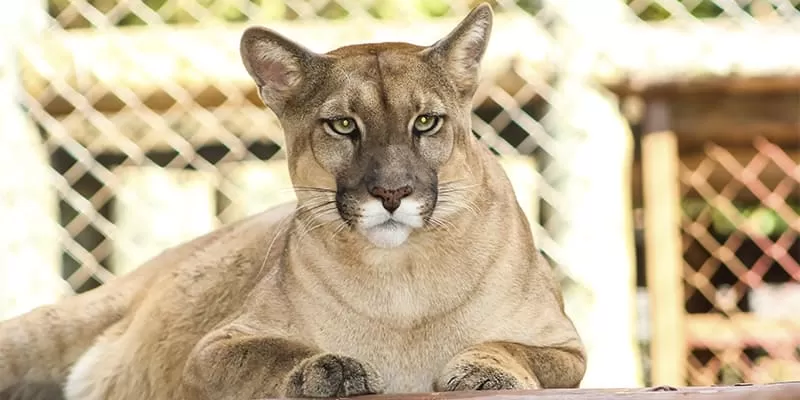
The Bio Park brings together, in a controlled setting, the aquatic and terrestrial wildlife of the Bonito region and the Pantanal. It is a short, largely covere
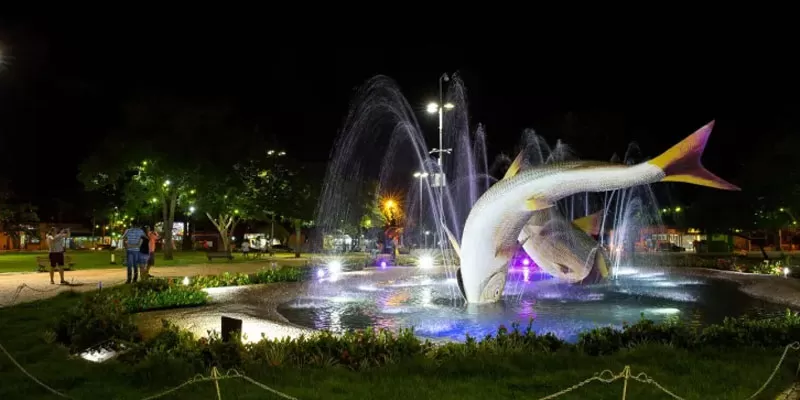
The night outing in Bonito shows the part of the day a conventional itinerary ignores: the wildlife that only moves after dark and a sky with almost no light po
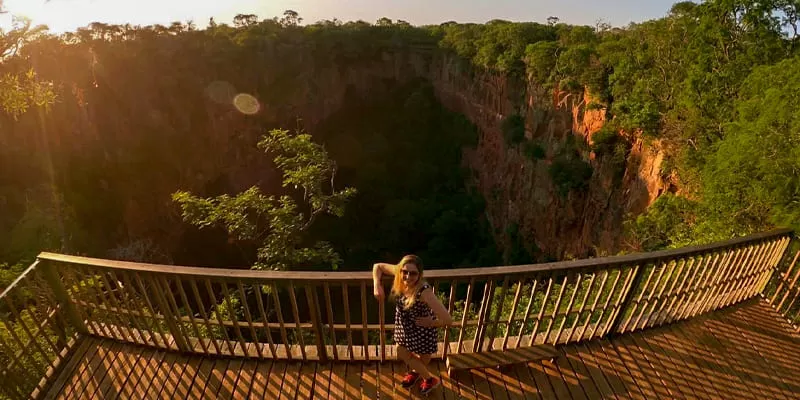
The Buraco das Araras is a vast sinkhole in the municipality of Jardim, on the road to the Rio da Prata, inhabited by red-and-green macaws. The visit is a short