
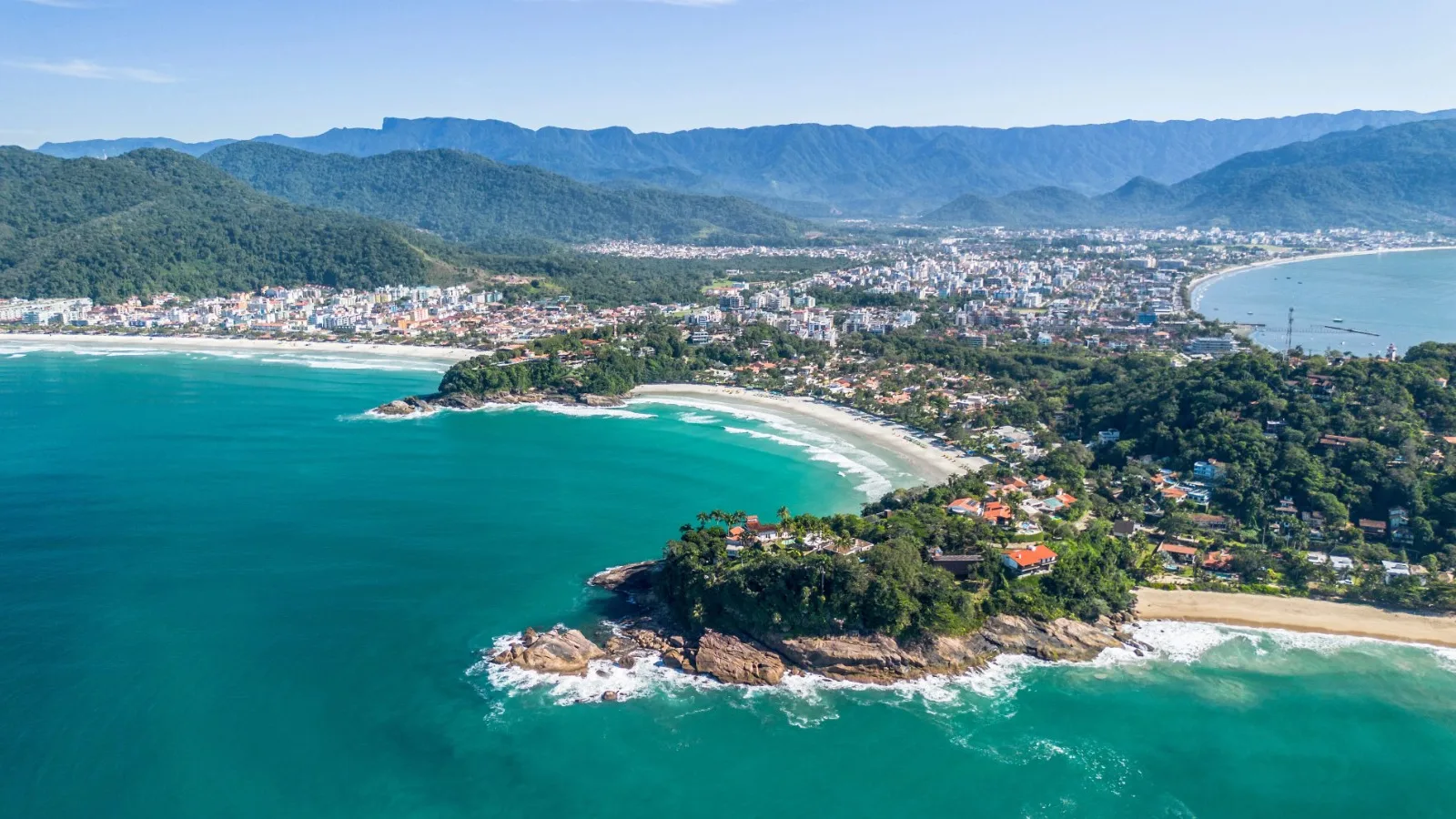
Ubatuba travel guide
Ubatuba is a long stretch of the São Paulo north coast where the Atlantic rainforest reaches the sand. It has more beaches than any trip can cover, and where yo
Paraty combines a preserved colonial centre, a bay full of islands and the rainforest of the Serra do Mar. Three distinct kinds of day sit within reach of one base, and fitting them together is the whole planning problem.
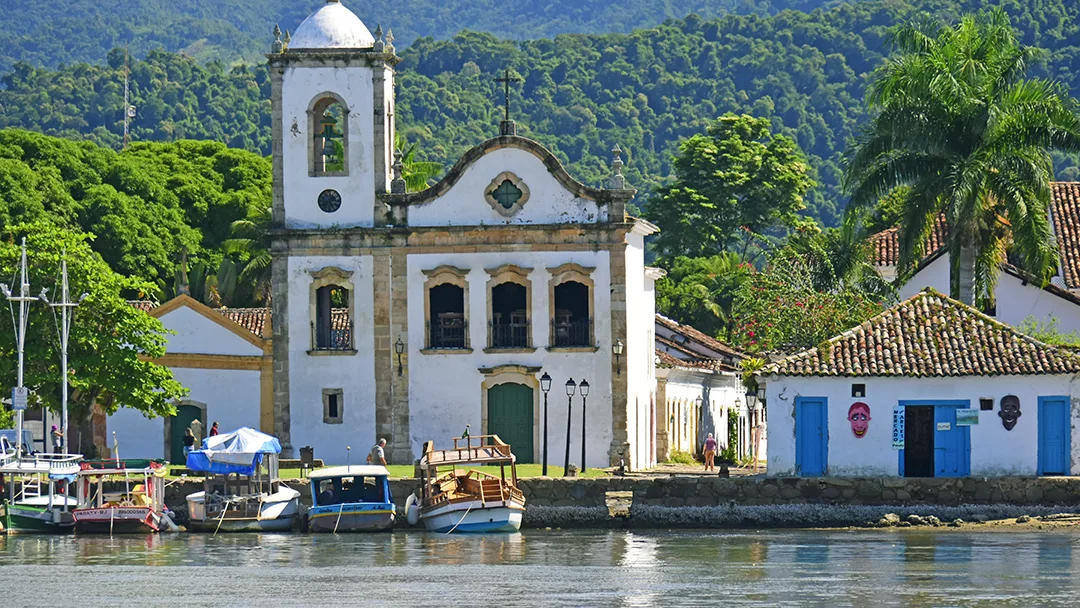
Paraty sits on the Costa Verde, the stretch of coast between Rio de Janeiro and São Paulo where the Serra do Mar meets a bay full of islands. It is one of the few places in Brazil where a preserved colonial town, a working bay and a mountain rainforest are all within reach of the same night in the same bed.
That combination is the reason to come and the reason the trip needs planning. Three very different kinds of day are available here, and they do not share a schedule: the town is a walking day, the bay is a boat day and the mountains are a road-and-trail day.
The old centre is closed to cars and paved with large irregular stones laid in the eighteenth century, when the town shipped gold out of Minas Gerais. The streets flood on the highest tides by design, which is still how they are cleaned, and the whitewashed houses with coloured window frames are protected as national heritage.
It is small enough to cross on foot in a few minutes and rewarding enough to spend a whole evening in. Wear shoes with grip: the stones are uneven, they are slippery when wet, and they are the single most common cause of a twisted ankle here.
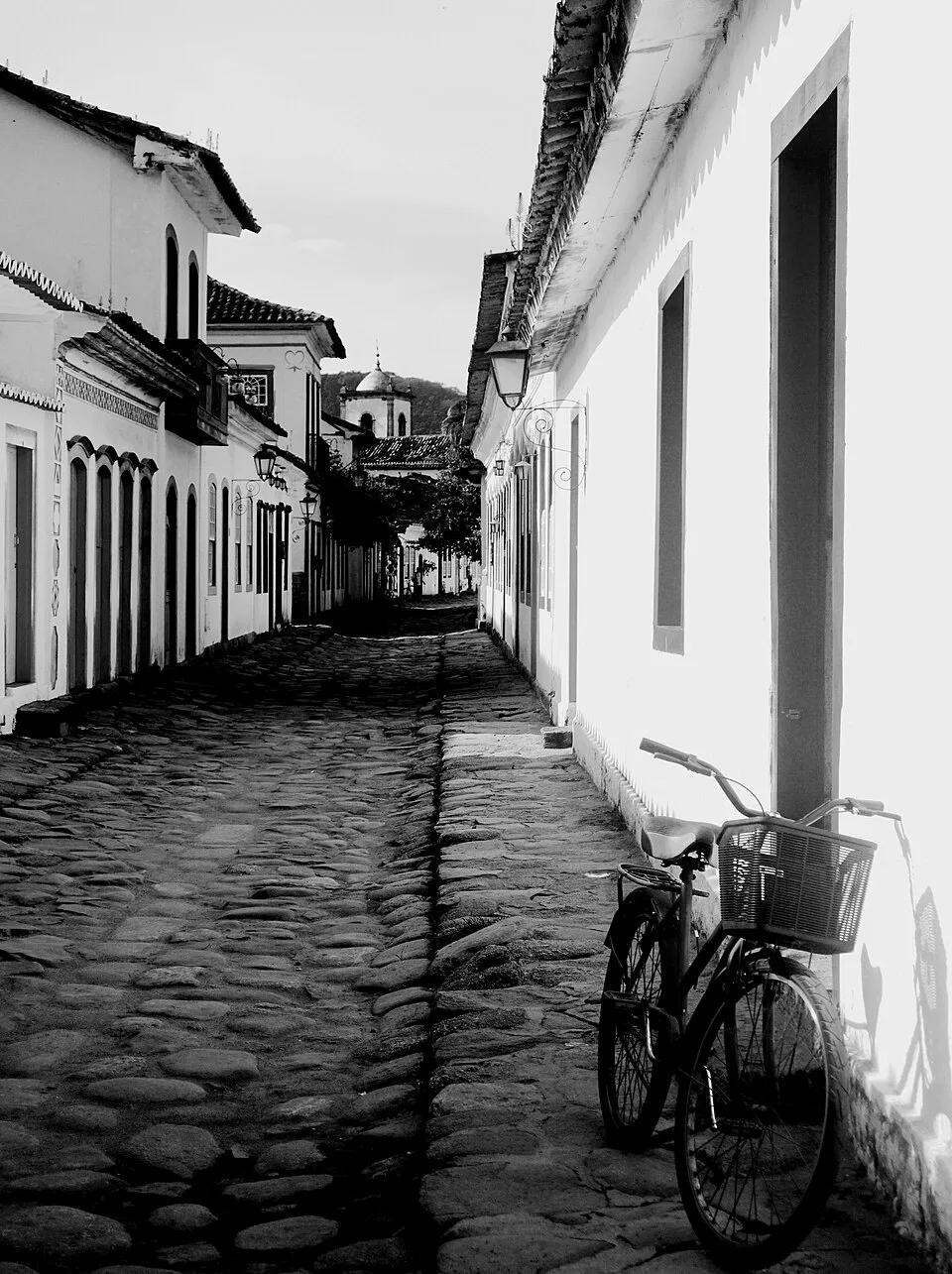
The centre is also where the restaurants, the galleries and the cachaça shops are, which makes it the natural base even though it is the noisiest part of town at weekends.
The bay in front of Paraty holds dozens of islands and small beaches, most of them reachable only by boat. The standard day is a shared schooner with several swimming stops; the better day, if the budget allows, is a small boat you direct yourself, which gets you to the quieter anchorages.
Further along the coast, beaches such as those around Trindade have road access and a different character: surf, a village rather than a town, and pools among the rocks. Weather closes crossings, so put the boat day early in the trip rather than on the last morning.
Behind the town the Serra do Mar rises into protected rainforest, cut by rivers with waterfalls and natural pools. Several are a short walk from the road, and the same route passes the small distilleries that make the cachaça the region is known for.
The old Caminho do Ouro, the paved colonial road over the mountains, is walkable in part and is guided. Take that guide seriously: this is dense forest, the stones are slippery, and rain in the hills raises the rivers quickly even when the coast is clear.
The drier and cooler months, roughly from autumn into early spring, give the most reliable days for boats and trails, with fewer people in the centre. The summer is hot, green and busy, and it is also the wettest: rain in the mountains can close trails and cloud the rivers.
Paraty has a busy calendar of festivals, and during the best known of them accommodation fills months ahead and prices rise. Check what is on before you fix dates — it is either the reason to come or the reason to come a fortnight later.
Three nights is the sensible minimum: one day for the town, one for the bay and one for the mountains, with the evenings in the centre. Two nights forces you to drop one of the three, and it is usually the mountains that go.
Four or five nights lets you add the coast towards Trindade, or simply repeat the bay on a better day. Paraty also works well as one half of a Costa Verde trip, paired with Ilha Grande or with the São Paulo north coast.
Paraty is on the coastal road between Rio de Janeiro and São Paulo, and most visitors arrive by intercity coach or by car from one of the two. There is no commercial airport in the town itself, so the journey is by road whichever city you fly into.
Once there you do not need a car for the centre or the bay, and a car is a liability in a town where the old streets are closed to traffic. You do want one, or a transfer, for the mountain waterfalls and for the beaches further along the coast.
Ubatuba is a long stretch of the São Paulo north coast where the Atlantic rainforest reaches the sand. It has more beaches than any trip can cover, and where yo