Flotation is what Bonito, in Mato Grosso do Sul, is known for: drifting downstream in a wetsuit and mask, carried by the current. The five rivers differ far more than the brochures suggest, and this page sets out how.
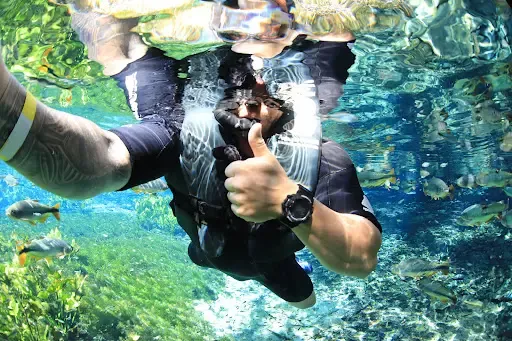
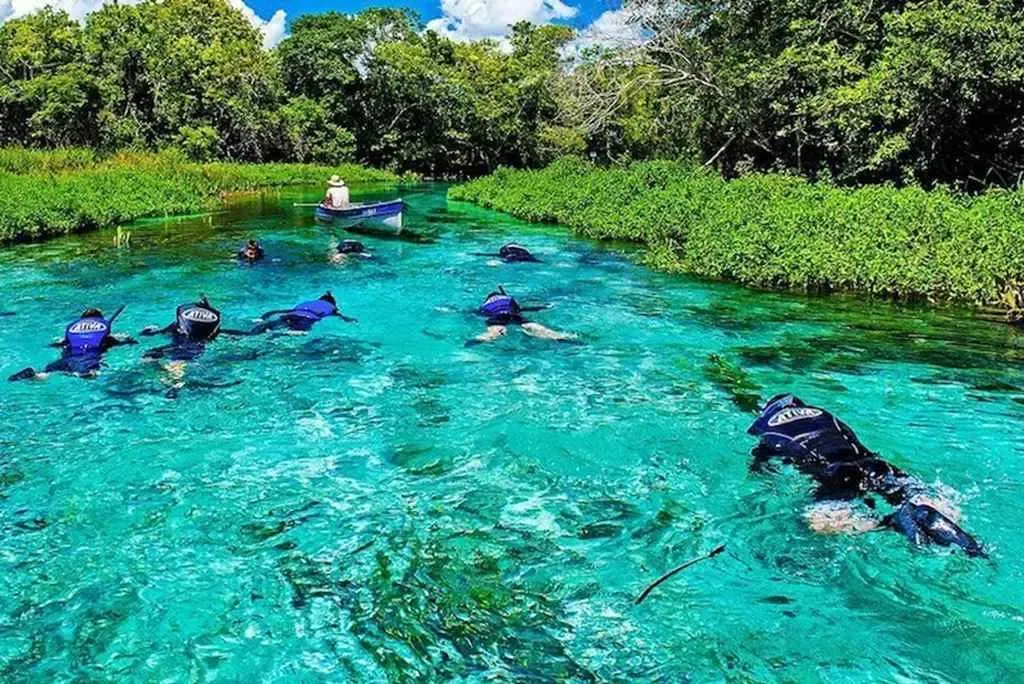
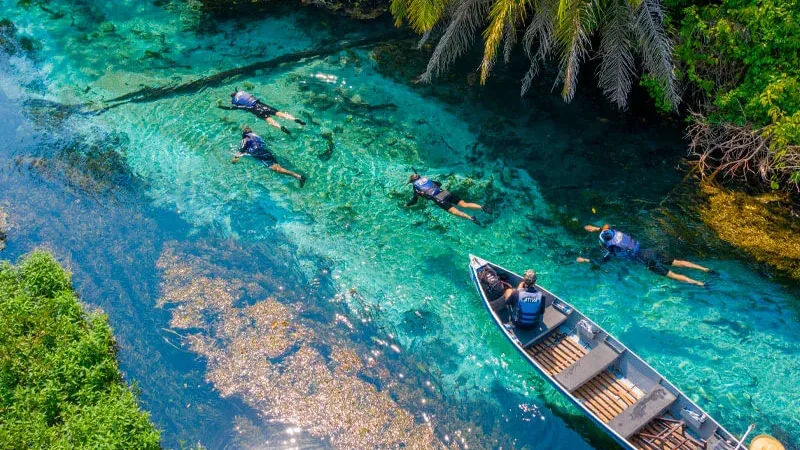
Flotation on a spring-fed river in Bonito, MS, where the visibility is the whole point.
Flotation is the activity Bonito, MS is known for, and the one most visitors book first. You put on a wetsuit, a mask and a snorkel, enter the river upstream and let the current carry you down while you look at the riverbed, the submerged plants and the fish. No swimming ability is required, because the wetsuit floats you and the river does the work.
What makes it possible in Bonito and almost nowhere else is the limestone under the whole region. Rainwater filters down through the rock, drops its sediment along the way and returns to the surface in springs carrying almost nothing in suspension. The result is water you can see through for a remarkable distance, and rivers that behave more like an aquarium than like anything you have swum in before.
Five rivers in the municipality run flotation, and a first-time visitor usually assumes they are interchangeable. They are not. The differences are in the length of the stretch, the amount of walking before and after, how much of the trip is spring and how much is open river, and how many people share the water with you. This page sets those differences out so you book the one that matches the day you want.
How flotation works in Bonito
Every flotation trip in Bonito is booked in advance through an accredited agency, which issues a voucher for a named person, a specific river and a specific time slot. There is no walk-up option, and the number of people admitted to each river per day is capped.
On arrival there is a briefing, then wetsuits and masks are issued and fitted. A guide goes into the water with the group and stays with it throughout. Most properties include a walk to the entry point, and several bring you back by boat or by vehicle rather than by the same path.
Allow half a day for any of them once transfers are counted, and remember that the properties are spread around the municipality along unpaved roads rather than gathered near the town. Two attractions in a day is comfortable; three means spending the day in a vehicle.
What actually differs between the rivers
Before comparing names, it helps to know which variables actually change the experience. Every flotation river in Bonito, MS gives you clear water and fish; these are the things that differ:
Length of the float — some stretches are short and gentle, others run long enough to fill a morning.
Walking — one river reaches the spring through a forest trail; others put you in the water within minutes of the car park.
Spring versus open river — water closest to the spring is stillest and clearest; further down, the river widens and the scenery changes.
Current — the calmer rivers suit nervous swimmers; the livelier ones carry you and ask for less effort.
Crowding and structure — some are small operations, others are properties with restaurants and several activities.
Weather sensitivity — the flooded sinkhole clouds after rain far faster than the spring-fed rivers do.
Read the five below against that list rather than against the photographs, which look almost identical whichever river took them.
Rio Sucuri
The classic first flotation in Bonito. The river leaves its spring a short way upstream, so the water is still, the visibility is consistently good and there is no current to fight. Entry is easy, from a platform rather than a scramble, and the stretch is gentle throughout.
The trip normally begins with a walk across the farm to the entry point and ends with a boat ride back, which means the effort is close to zero. That combination makes it the usual choice for families, for older visitors and for anyone who is nervous in water.
Because it asks so little of you, it is also the river that books out first. If your dates are fixed and the Sucuri is what you want, reserve it before anything else in the trip, and treat an afternoon cave as the natural pairing rather than a second river.
Rio da Prata
The longer day, and the one that starts on foot. A trail through preserved forest leads to the spring, so part of the outing is a walk under the canopy and part is the river. The float that follows is the longest of the flotation rivers in Bonito, MS.
The underwater scenery changes as you go: you begin in the very clear water of the spring and end in a wider stretch where the river has picked up volume. It is also where fish are most consistently visible in numbers, which is what most people remember about it.
The extra walking and the greater length make this the better fit for anyone who wants more than a brief dip, and it is the one to choose if you are only doing a single river. It is not the right choice for very small children or for anyone who struggles with an uneven trail.
Nascente Azul
Built around a spring inside a property that also runs other activities, which makes it the practical answer for a group that does not all want the same thing. The flotation itself is short and calm, close to the source, with very still water.
The rest of the site absorbs whoever is not in the water that morning: there is a restaurant, there are trails and there are other paid activities on the same grounds. For families split between swimmers and non-swimmers, that is worth more than a longer float.
The convenience is also the trade-off. It reads more like a structured park than a river you were quietly let into, and if what you want is the silence of the water, one of the longer rivers will suit you better than this one.
Aquário Natural
Short, shallow and closely supervised, at the spring of the Baía Bonita. The guides stay in the water with the group the whole way rather than leading from a boat, which makes this the usual entry point for families with young children and for first-timers.
The concentration of fish right at the spring is what people remember, and it is the easiest place in Bonito, MS to see them without any technique at all. The short distance means the visit sits comfortably inside half a day even with the transfer.
Expect a full briefing, a fixed route and firm enforcement of the rule against touching the riverbed. That rule is the reason the water is still readable after decades of visits, and the guides here apply it more visibly than anywhere else.
Lagoa Misteriosa
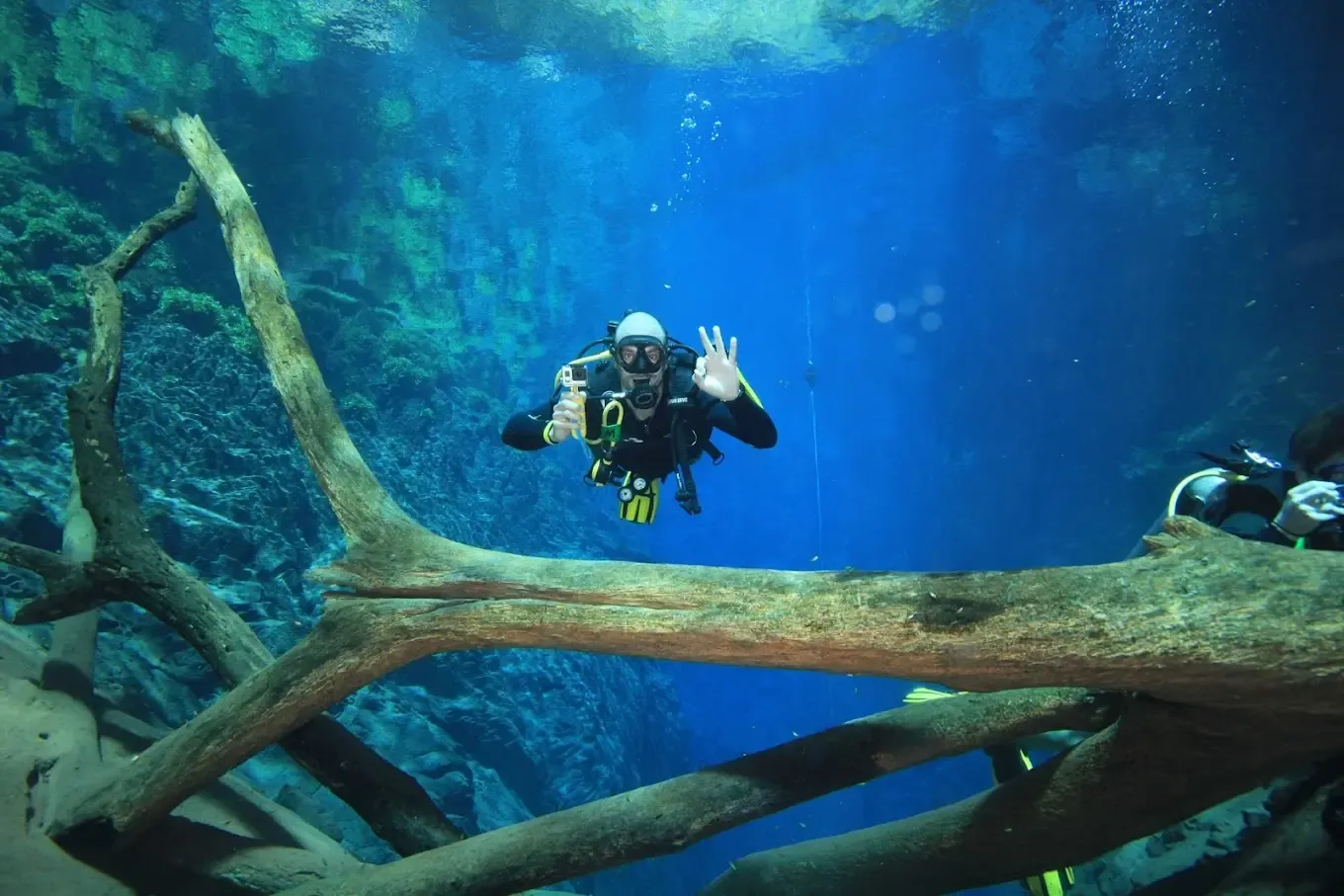
A flooded sinkhole rather than a river, and the difference registers immediately: still, very deep water instead of a current carrying you along. Floating on the surface with a mask gives you a sense of depth below you that no river in Bonito produces.
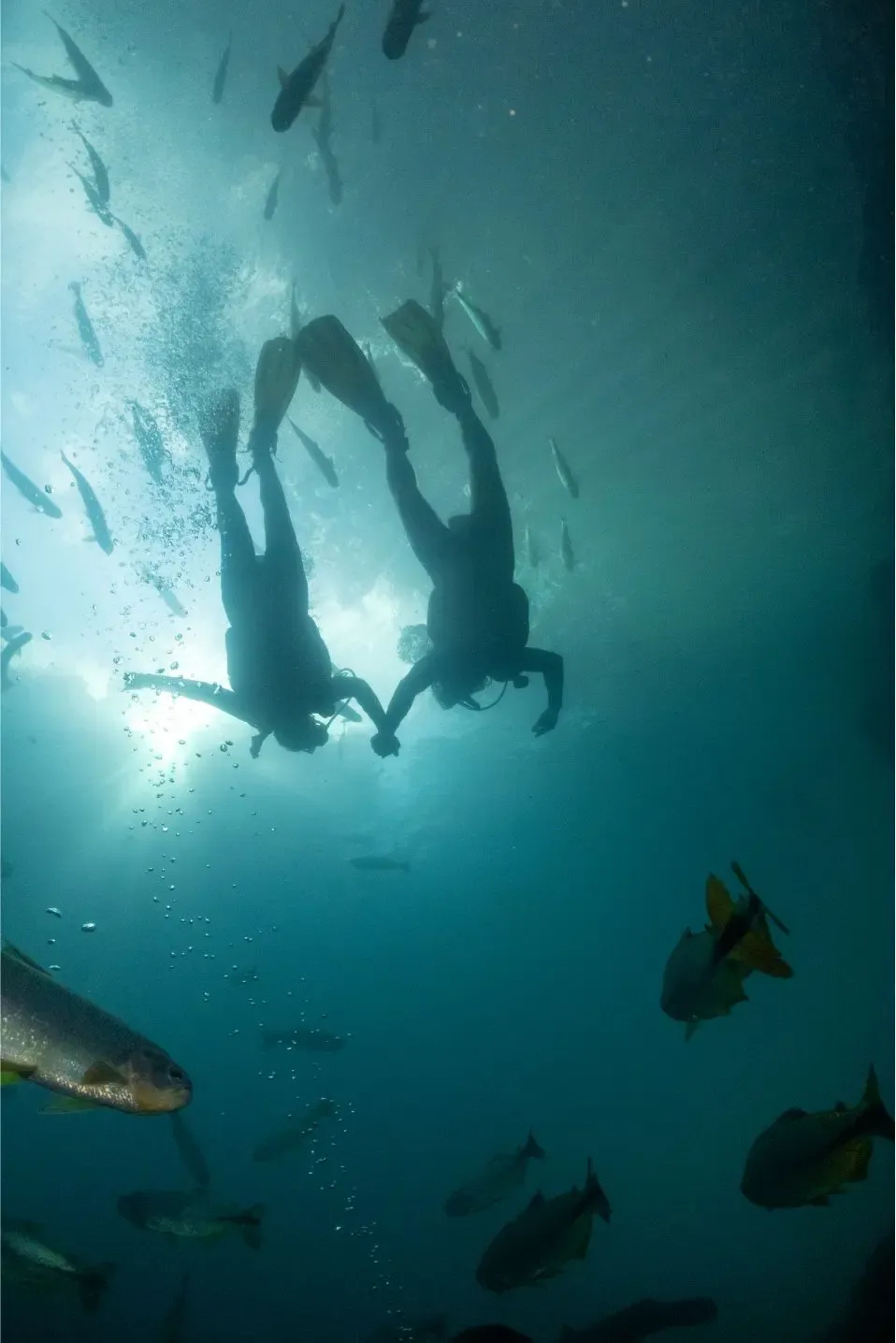
It also offers scuba for certified divers, and it is the only site here where the interesting part is vertical rather than horizontal. There is nothing to drift past; the experience is looking down into water that keeps going.
It is the most weather-dependent attraction in the group. Visibility changes with rain in the catchment above, so operators cancel at short notice — which is the correct call rather than an inconvenience, and a reason not to put it on your last morning.
Choosing between them
If you are doing one river only, the Rio da Prata gives the most complete version of the activity: a walk in, a long float and the widest range of what there is to see. If the group includes children or someone anxious in water, the Aquário Natural or the Rio Sucuri is the safer choice and neither is a lesser day.
If you are doing two, take one spring river and the Lagoa Misteriosa rather than two spring rivers. Two floats in a row is the most common way to waste a day in Bonito, MS: the second shows you what the first already did, and you finish the trip having seen one thing twice instead of two things once.
Whatever you choose, book the flotation for early in your stay. It is the attraction most likely to be cancelled by rain, and putting it first leaves somewhere for it to move to. A cave, which rain does not affect, is the right thing to have in reserve.
When the water is clearest
Visibility is the entire product here, and it depends on rainfall in the days before you arrive rather than on the month printed in a brochure. Heavy rain stirs sediment into the rivers and turns a flotation trip into a swim in cloudy water; when it is bad enough, properties suspend operations rather than sell a poor day.
The drier months give the most reliable clarity and the highest chance that everything you booked actually runs. They are also when the slots disappear first, which is the practical argument for reserving from home rather than on arrival.
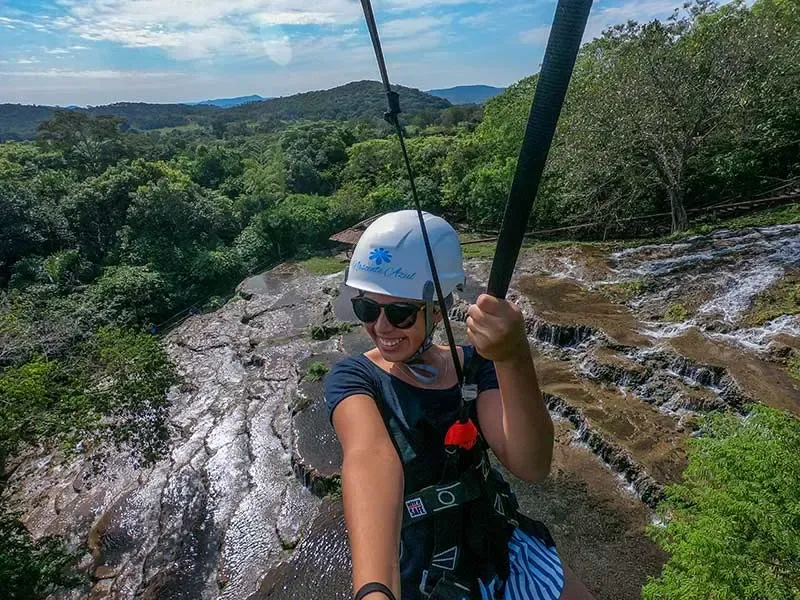
The wetter months are not a write-off: the springs recover quickly and the waterfalls are at their best, so a trip in that season simply needs more flexibility and a cave held in reserve. What does not work in either season is arriving with a fixed, unmovable schedule.
What to bring
The properties supply the wetsuit, the mask, the snorkel and usually the boots. What you bring is small and mostly about what happens before and after the water:
Swimwear worn under your clothes, so you are not changing in a queue.
A towel and a complete dry change for the drive back, which is longer than you expect.
Footwear with grip that can get wet, for the walk to the entry point.
Water and a hat for the walking, and shade for waiting between groups.
A waterproof camera if you have one — phones in plastic bags are a common loss here.
No sunscreen or repellent before entering the water at the rivers that prohibit it; apply after, not before.
Leave anything valuable in the vehicle or in the lockers the property provides. You will be in the water for a while, and the entry and exit points are not where your belongings stay.
Bonito, in Mato Grosso do Sul, is the one destination in Brazil where you cannot improvise. Every attraction runs on a booking system with a daily cap, and the
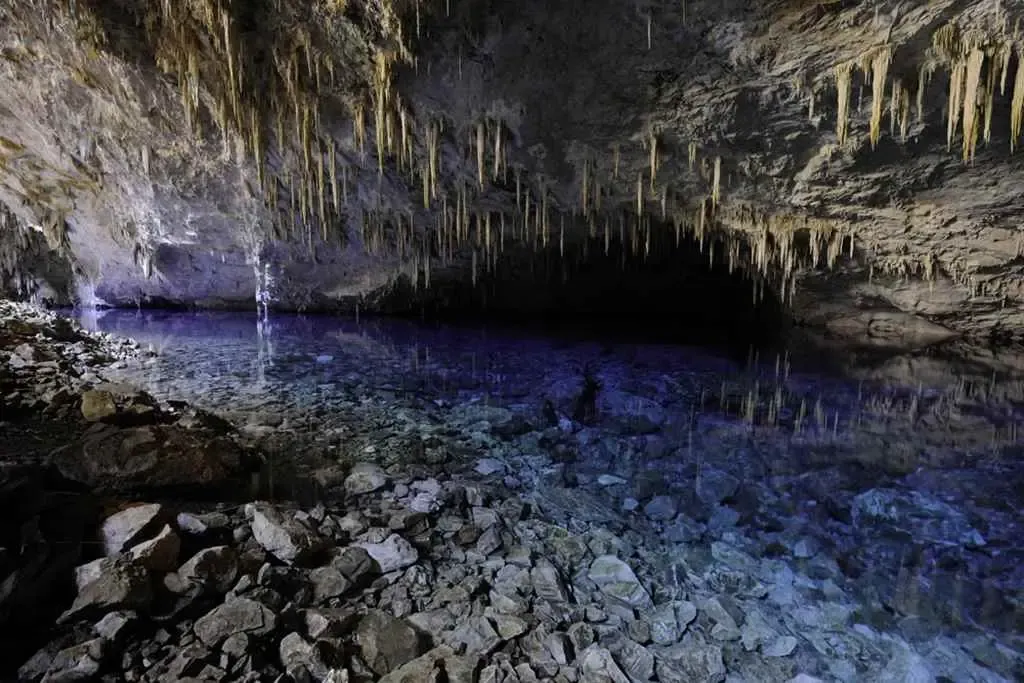
The same limestone that clears the rivers of Bonito, in Mato Grosso do Sul, hollowed out the ground beneath them. Some caves you walk into; one you descend into