Bonito, in Mato Grosso do Sul, sits between two ecosystems, and the wildlife is the part of the trip most often left out of the plan. Nothing is guaranteed, but the odds are far better at some hours and some places than others.
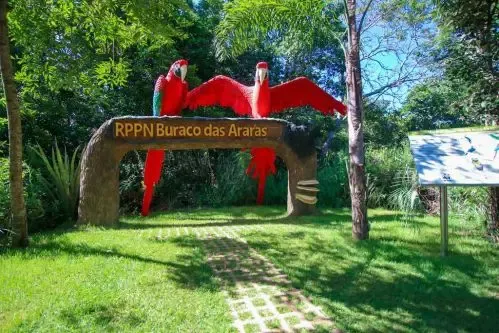
Buraco das Araras, the sinkhole where red-and-green macaws nest, near Bonito, MS.
Bonito, in Mato Grosso do Sul, sits between two ecosystems, and the wildlife is the part of the trip most often left out of the plan. Visitors book the rivers, the caves and the waterfalls, then discover on the last morning that the animals were the thing they remember and the thing they gave the least time to.
The region is on the southern edge of the Pantanal and inside the influence of the Serra da Bodoquena, which is a cerrado and dry-forest landscape. That meeting produces an unusual mix: macaws nesting in a sinkhole, the birds of the open country, the fish of the clear rivers, and the larger mammals that move between the two.
None of it is guaranteed and none of it runs to a schedule. What this page does is set out where the odds are best, what time of day matters, and which visits give you understanding rather than only a glimpse.
Two ecosystems meeting
The Pantanal is open, seasonally flooded country where animals are visible at distance across grassland and around water. The Serra da Bodoquena and the land around Bonito, MS is drier and more wooded, so the same species are present but far harder to see through vegetation.
That difference decides how you spend a wildlife day. On the edge of the Pantanal you scan open ground and water from a vehicle or a boat; around Bonito you walk quietly, listen more than you look, and take what the forest offers.
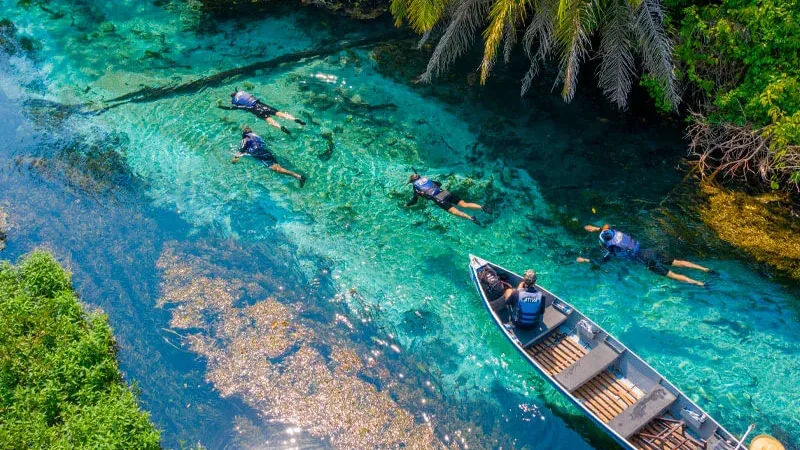
The rivers add a third layer that people forget to count as wildlife at all. The fish you drift over on a flotation trip are wild animals in their own habitat, seen more clearly than anything you will see on land here, and the visibility that makes the rivers famous is what makes that possible.
What you can realistically see
Set expectations by habitat rather than by wish list. In and around Bonito, MS the realistic sightings are:
Macaws — reliable at the sinkhole, where they nest in the walls and are visible from the rim.
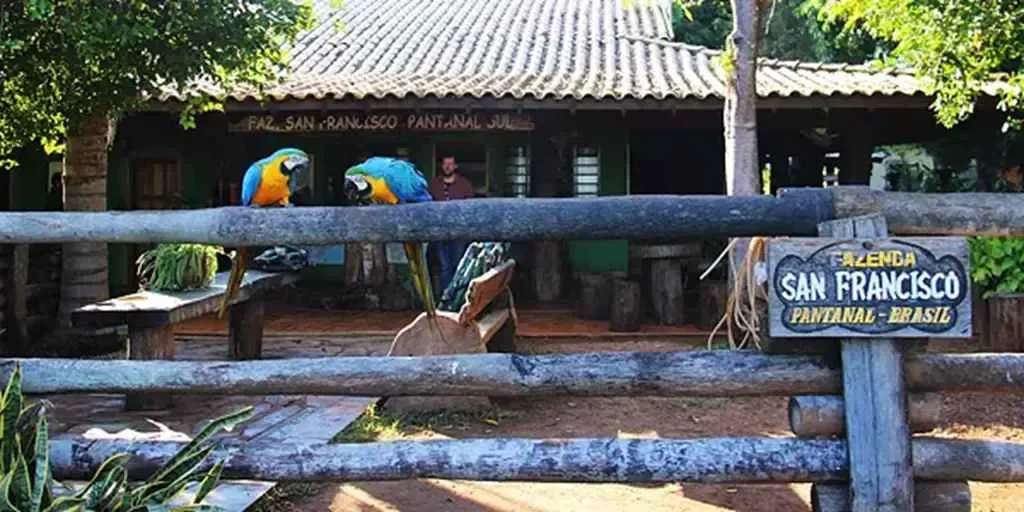
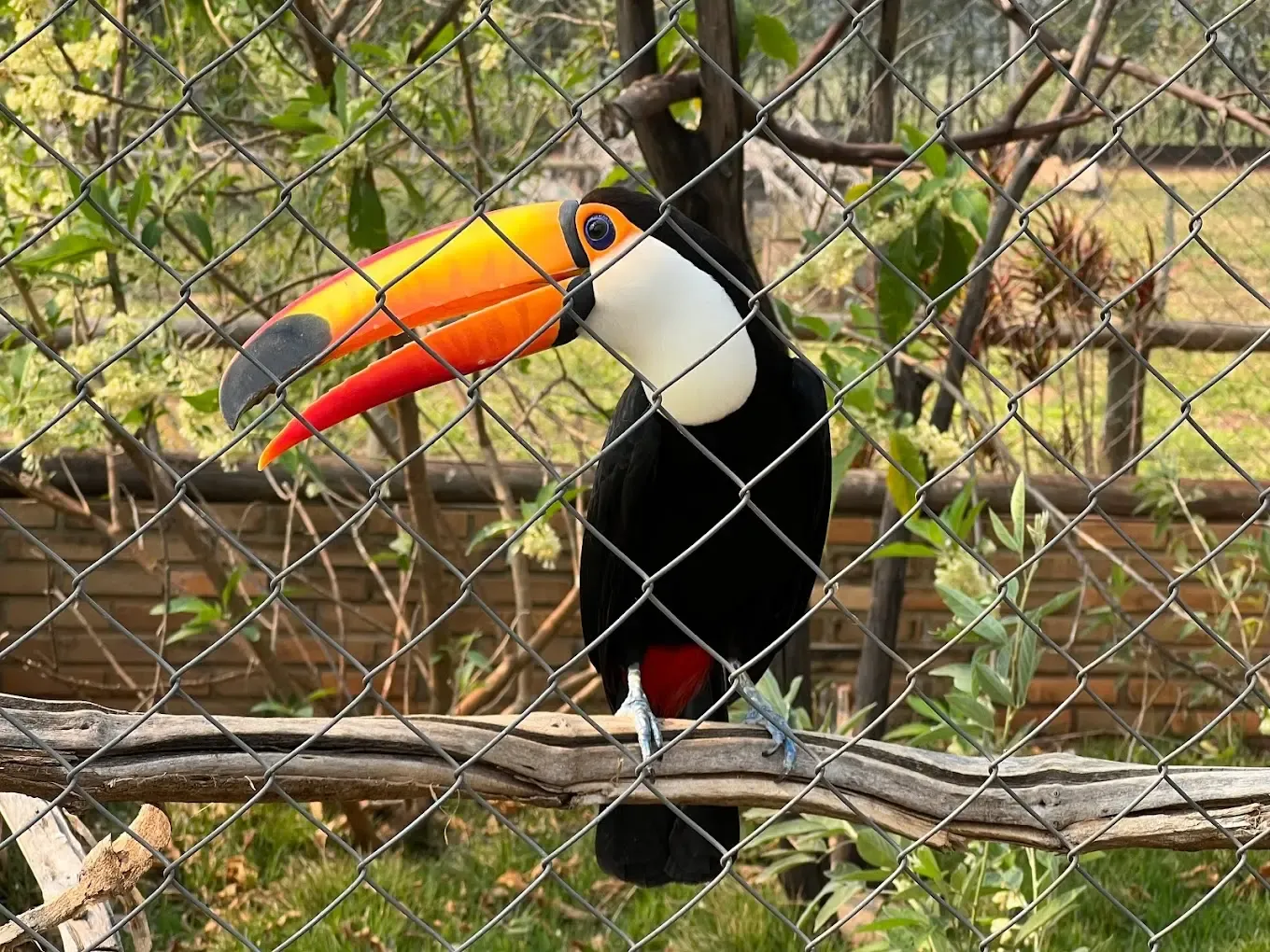
Birds generally — toucans, jabiru storks, kingfishers, parakeets and a long list of smaller species, most easily near water and at dawn.
Caimans — common along rivers and in the Pantanal wetlands, usually motionless on a bank.
Capybaras — frequent on riverbanks and in open ground near water.
Monkeys — heard far more often than seen, in the forest around the trails and river properties.
Fish — guaranteed, at close range, and the one category where the clarity of the water does the work for you.
Large cats live in the region and are almost never seen by visitors. Anyone selling a jaguar in Bonito is selling the Pantanal, several hours north, and even there it is a matter of season, patience and luck.
Buraco das Araras
A large sinkhole where red-and-green macaws nest in the walls, seen from viewpoints on the rim rather than from below. The visit is a guided walk around the edge with stops at platforms, and it does not involve any descent.
The birds are resident rather than seasonal, which makes this the most reliable wildlife sighting in the Bonito, MS region. Early morning and late afternoon are when they move most, calling and circling inside the sinkhole rather than sitting still.
The walk is short and level enough for most visitors, and the guide is where the value is: the geology of the sinkhole and the nesting behaviour are both explained, and neither is obvious from looking.
Birdwatching
The position between the Pantanal and the dry forest puts an unusual mix of species within reach of the same base, which is why birders treat Bonito, MS as a stop in its own right rather than a day trip from somewhere else.
Guided outings leave early and go to the habitat rather than to a viewpoint, so expect quiet walking, long periods standing still and a guide who identifies by call before you have seen anything. Several river properties are excellent for this before their day visitors arrive.
Bring binoculars. Almost nothing here is seen properly without them, and the difference between a shape in a tree and an identified species is entirely a matter of optics.
Projeto Jiboia
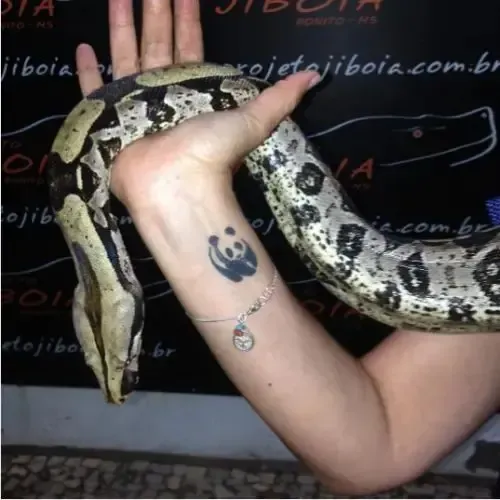
A talk about snakes given in the evening by people who work with them, aimed at replacing the reflex to kill one with an understanding of what it actually is and what it does. It runs about an hour and takes place in town rather than out on a farm.
It is the most useful hour in Bonito, MS for anyone who will be walking trails here, and it works for children without turning into a show. The explanation covers which species are venomous, how bites actually happen and what to do if one does.
Handling depends on the session and on the animal, and it is never the point of the evening. Go for the explanation, and treat any contact with an animal as incidental to it.
Pantanal day trips
The southern edge of the Pantanal is close enough to reach and return in a day, on outings that combine a long drive, a boat or a safari vehicle, and time in open country where animals are visible at distance.
The dry months are when the viewing works, because receding water concentrates animals around what is left. In the wet season the same landscape is flooded, the animals disperse and the day becomes about the scenery instead.
A day is a taste and not a substitute for staying in the Pantanal. Treat it as an extra day rather than as the reason you came, and book it around the water attractions instead of instead of them.
Bio Park
A conservation and education centre where native birds and other animals are kept in enclosures, with guided visits explaining what each species is, where it lives and why it is there. It is a short visit rather than a day out.
It works as the wet-weather answer and as the visit that makes the rest of the trip legible: seeing a species named and explained here changes what you notice later on a trail or from a boat.
Useful with children, and useful before a wildlife morning rather than after one. An hour spent learning what a jabiru or a toucan actually looks like pays for itself the first time you see one in the open.
Aquário de Bonito
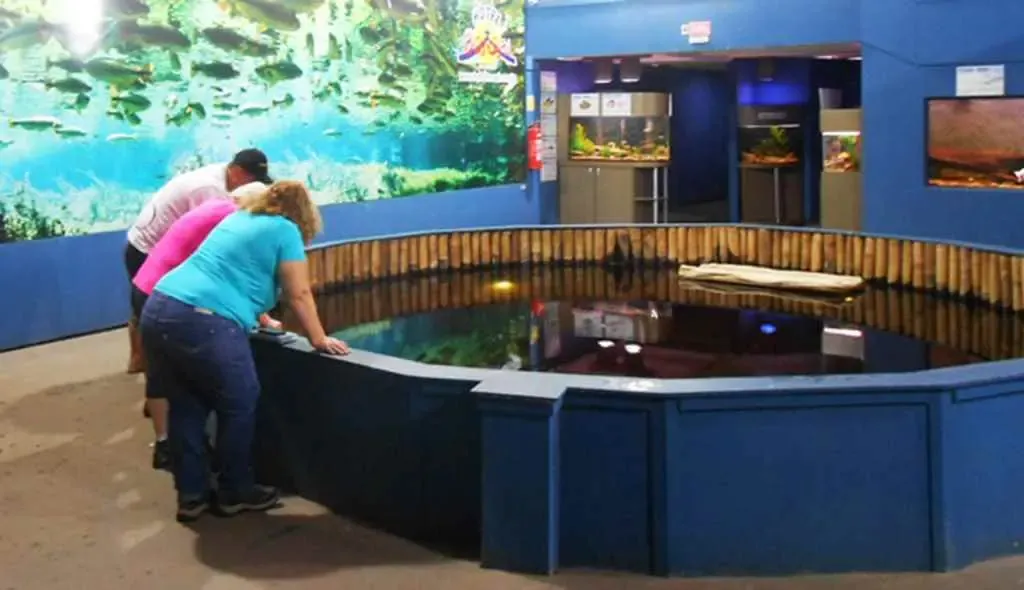
Tanks holding the fish of the regional rivers, which is the one place you can look at them without a mask and without the current moving you along. The species are labelled, which the rivers themselves do not do.
An hour is enough, and it is best used before a flotation trip rather than after: knowing what you are looking at turns a wall of silver into several distinct species with different habits.
It is indoors, which makes it another answer to a full day of rain, and it is close enough to town to fill a gap between a morning attraction and dinner without a long drive.
When to go out
Early morning is the answer for almost all of it. Activity drops sharply through the middle of the day, which happens to be exactly when most river attractions are running — so a wildlife morning pairs naturally with a river afternoon rather than competing with it.
Late afternoon is the second window, and it is the better one at the sinkhole, where the light is on the walls and the macaws are moving before they settle. The evening belongs to the snake project, which runs after dark by design.
Season matters most for the Pantanal day trip and least for the sinkhole. The macaws are there all year; the open-country wildlife of the Pantanal is a dry-season proposition, and going in the wet months means a different and quieter day.
How to actually see things
Wildlife watching is a skill, and most visitors are using none of it. A few habits change the odds far more than the choice of destination does:
Go at dawn. It is not a preference, it is when the animals are active.
Be quiet, and stop moving. Most sightings happen to people who have been standing still for several minutes.
Listen first. Guides here identify almost everything by call long before it is visible.
Bring binoculars, and learn to find things with them before you need to.
Keep your distance and never feed anything, including the fish.
Accept blank days. A morning with nothing is part of the activity, not a failed booking.
The single best investment is a guide who knows the specific property rather than the region in general. They know which tree the toucans use, which bend of the river the caimans hold, and at what hour each of those is worth walking to.
Bonito, in Mato Grosso do Sul, is the one destination in Brazil where you cannot improvise. Every attraction runs on a booking system with a daily cap, and the
Waterfall days in Bonito, Mato Grosso do Sul, are trail days. How much walking you sign up for is the real difference between the circuits, and it is the one ca
Not every day in Bonito, Mato Grosso do Sul, needs a wetsuit and a briefing. The river days are the ones you can take slowly, and they are what absorbs a bookin