
Ubatuba travel guide
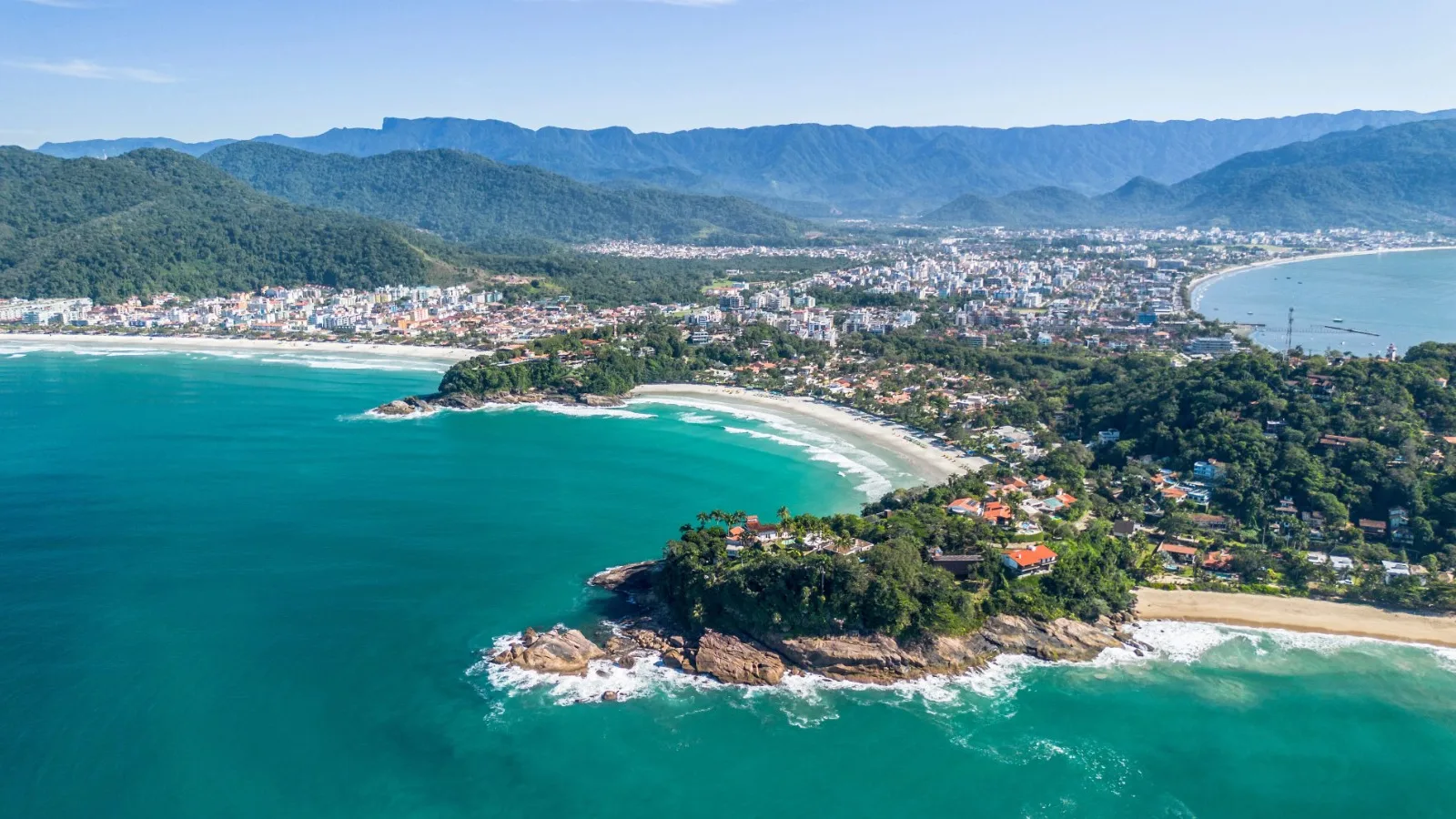
Ubatuba is a long stretch of the São Paulo north coast where the Atlantic rainforest reaches the sand. It has more beaches than any trip can cover, and where yo
A trip to Ubatuba without a car works, but only if you choose the base for that and accept a smaller stretch of coast. The mistake is booking somewhere remote and expecting to move.
Everything on this page comes from the decisions that shape the trip: when to go, where to base yourself and how long the place deserves.
Anyone travelling here tends to check the sky before committing to a day outdoors: Full forecast for Ubatuba.
Read the guideThe honest answer is yes, with a condition. Ubatuba is a long municipality strung along a single coastal road, and the beaches are spread over tens of kilometres of it. Without a car you are not seeing that whole coast — you are choosing a section of it and doing that section well.
That is a smaller trip than the one the photographs suggest, and it is often a better one. Fewer hours sitting in traffic on a summer weekend, no parking problem at the popular beaches, and a coast you get to know on foot instead of through a windscreen.
What makes a car-free trip to Ubatuba fail is almost never the lack of transport. It is accommodation chosen for the view, followed by a week spent trying to get out of it. So this page deals with the base first, because that is the decision that makes everything else possible or impossible.
Staying near the town centre or on one of the built-up beaches close to it is what makes a car-free trip work. From there you are within walking distance of somewhere to eat, a supermarket and a pharmacy, the bus stops are a short walk away, and the boat departures are reachable without depending on anyone.
A guesthouse on a quiet beach far from the centre is the opposite decision. It is a lovely place to be and a difficult place to leave: without a car you are dependent on a bus you have to build the day around, or on a taxi fare each way that quickly costs more than the car you did not rent.
Decide this before you book the room, not after. Almost every complaint about Ubatuba without a car traces back to a base chosen for the view rather than for the movement.
If quiet matters more than mobility, choose a remote base deliberately and plan to stay put: long days on site, meals where you sleep, and one or two outings arranged in advance. That works very well, as long as it was chosen rather than endured.
Municipal buses run along the coastal road and connect the centre with beaches to the north and to the south. They are the backbone of a car-free trip in Ubatuba and they work, with the caveat that frequency drops sharply outside the summer season and on Sundays.
Check the timetable for the return before you commit to the outward journey. The common failure here is not getting somewhere, it is getting back: a beach that is forty minutes out in the morning can be a long wait in the late afternoon if you did not look.
Ask your accommodation rather than the internet. Municipal timetables change with the season and are not reliably published online; the people on the desk know them because they use them.
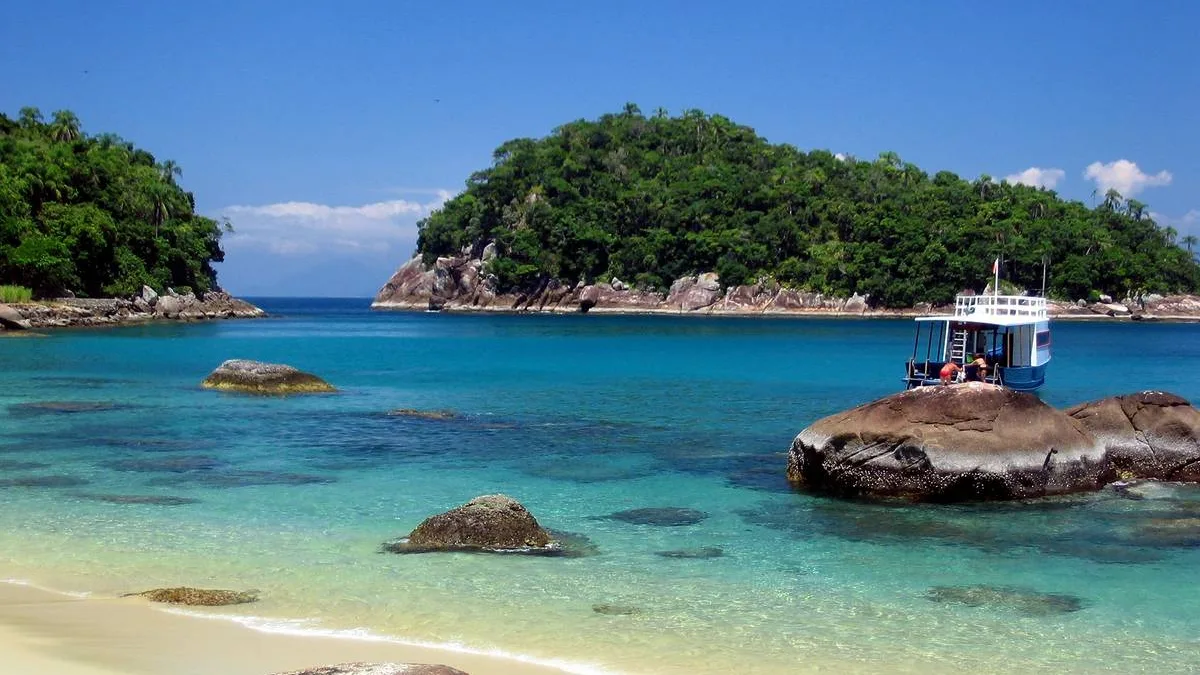
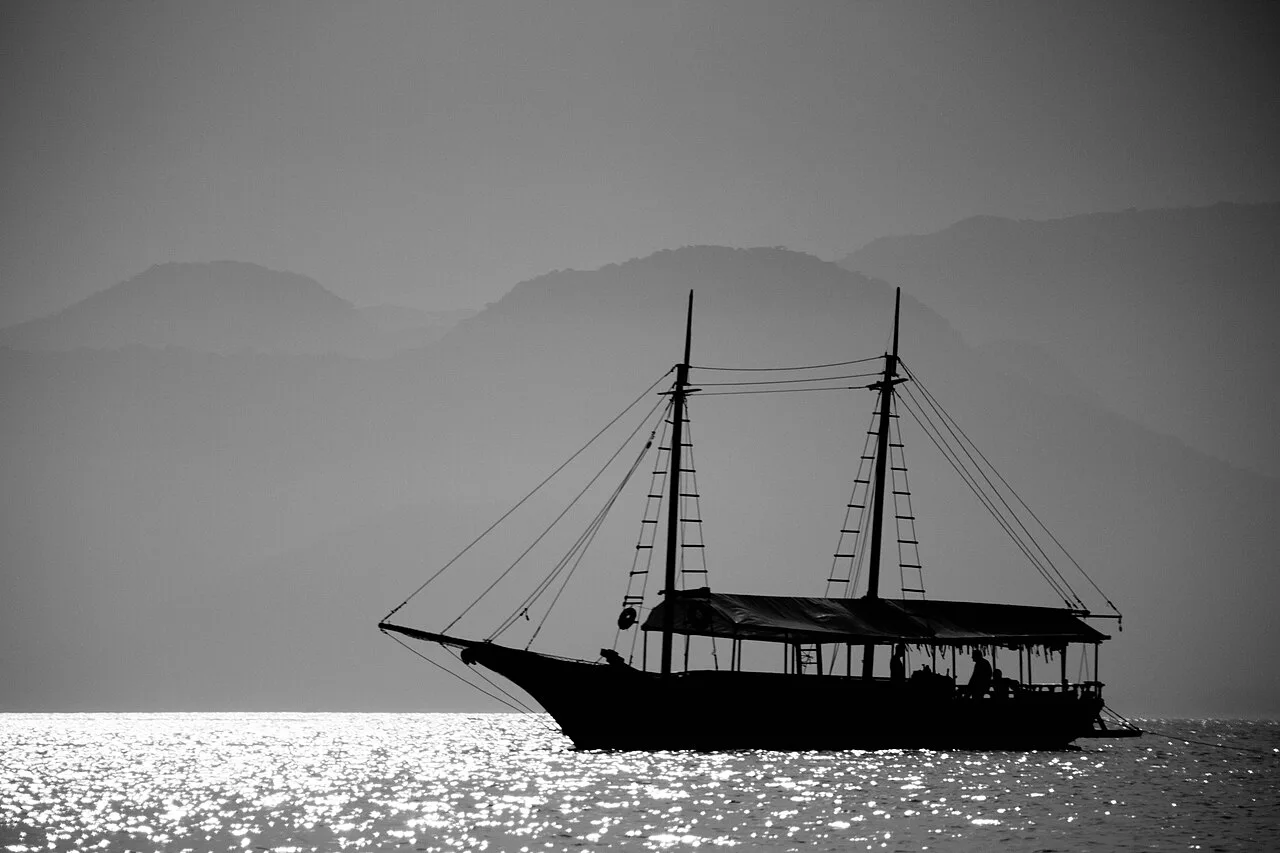
This is the part people miss. Several of the beaches worth the trip have no road anyway, so a car would not have taken you there: the boat is the access, and it leaves from points you can reach on foot or by bus.
Used deliberately, that turns the constraint into the trip. A day to an island, a day dropped at a beach with no road, and a day walking a forest trail down to the sand are three of the best days available here, and none of them needs a car.
The budget shifts accordingly. What you did not spend on rental and fuel pays for the crossings, and the trade is almost always favourable: the car would have given you beaches other people also reach, the boat gives you the ones they do not.
Intercity coaches connect Ubatuba with São Paulo, Rio de Janeiro and the towns along the coast, and the terminal is in the centre. Arriving without a car is therefore straightforward, even if moving around afterwards takes planning.
From the São Paulo airports the journey is by road in every case: there is no commercial airport in Ubatuba. Book the coach ahead in high season, and expect the coastal road to be slow on the days holidays begin.
A week without a car in Ubatuba looks like this in practice:
That is not a reduced version of the trip with a car. It is a different trip: slower, with fewer beaches and more time on each of them.
Rent one if you are travelling with small children and a lot of equipment, if you want the far northern and southern ends of the municipality in the same trip, or if you are visiting outside the summer season, when buses thin out.
Otherwise, spend on the boat days what you would have spent on the car. It buys more of what you came for, and the coastal road in January is not something anyone remembers fondly.
Ubatuba is a long stretch of the São Paulo north coast where the Atlantic rainforest reaches the sand. It has more beaches than any trip can cover, and where yo
Ubatuba has dozens of beaches along a long, indented coast. They are not interchangeable, and choosing by photograph is how people end up driving an hour to the